
 Pin It
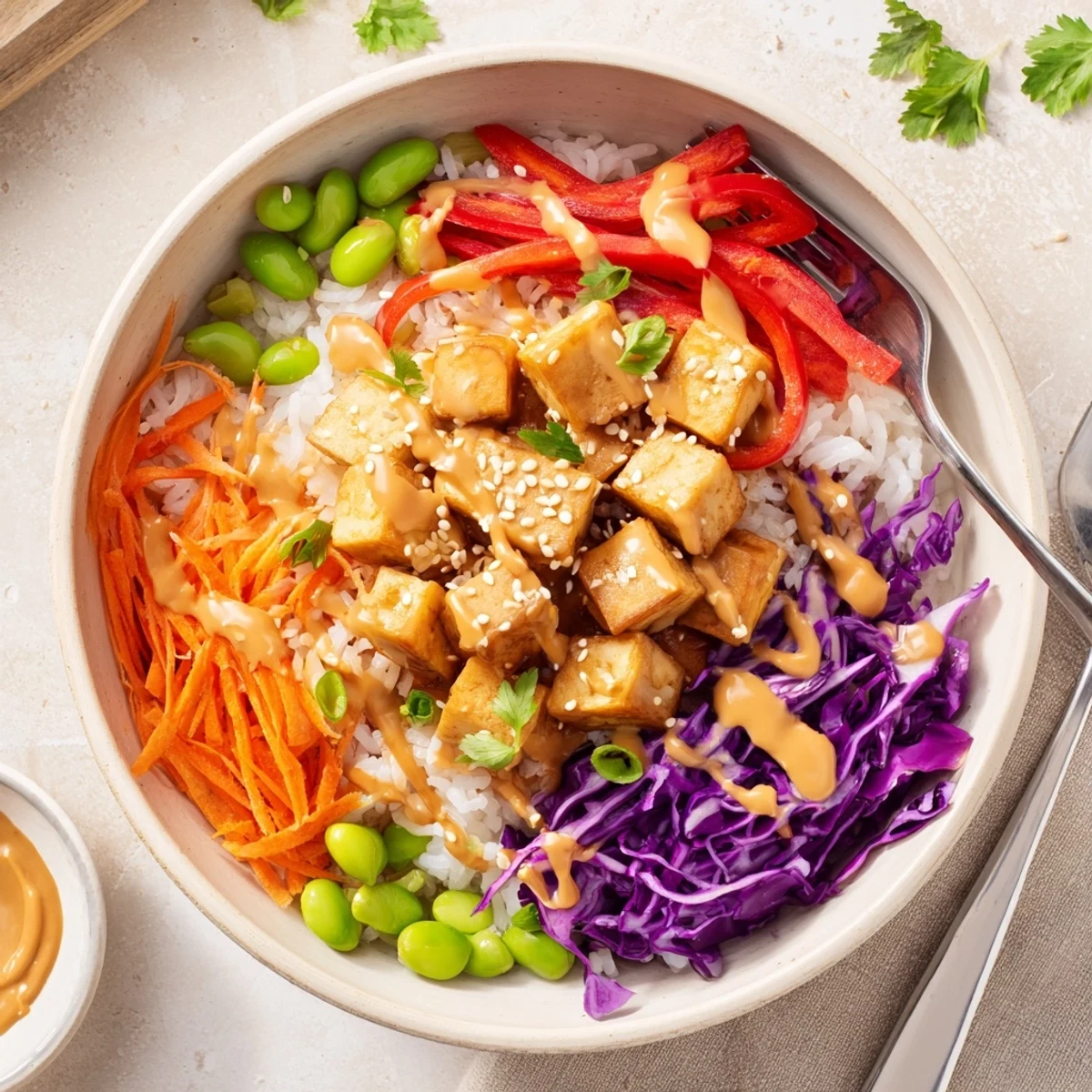
 This Asian-inspired rice bowl brings together crispy sesame tofu, vibrant julienned vegetables, and a luscious peanut sauce in under 40 minutes.
Firm tofu is marinated in soy sauce, coated in cornstarch, and pan-fried until golden and crunchy. Served over fluffy jasmine rice with shredded cabbage, bell pepper, edamame, and carrot, then generously drizzled with a creamy peanut butter sauce balanced with lime, ginger, and a hint of maple sweetness.
It's entirely plant-based, dairy-free, and easily adapted for gluten-free diets using tamari. Each serving delivers 19g of protein and plenty of satisfying textures and bold flavors.
The sizzle of tofu hitting a hot pan on a rainy Tuesday evening taught me more about patience than any cookbook ever could. I had stumbled home from a long day, craving something vibrant but unwilling to spend an hour fussing over dinner. That first crispy tofu rice bowl, drizzled with a peanut sauce I whisked together from whatever jars lingered in my fridge, rewired my weeknight cooking entirely.
A friend once told me this bowl changed her relationship with tofu, which remains the nicest compliment my cooking has ever received. She had always found tofu bland and spongy until she watched me press it firmly, toss it in cornstarch, and let it crisp undisturbed in a hot skillet. Now she makes it weekly and texts me photos of her own colorful variations.
Ingredients
- Firm tofu (400 g): Pressing it for even ten minutes transforms the texture from watery to chewy and crisp. The soy sauce marinade seeps in quickly, but the cornstarch coating is what creates that golden crust everyone fights over.
- Jasmine or basmati rice (250 g): Jasmine brings a subtle floral note that pairs beautifully with the nutty sauce. Rinsing until the water runs clear removes excess starch and prevents gummy grains.
- Carrot, red cabbage, bell pepper, edamame: The color combination is not just pretty, it delivers a broad spectrum of vitamins and keeps every bite texturally interesting.
- Creamy peanut butter (80 g): Use the natural kind with no added sugar if possible. The sauce balances richness from the peanuts with brightness from lime juice and a gentle sweetness from maple syrup.
- Soy sauce, rice vinegar, lime juice, maple syrup, garlic, ginger: These build layers of salty, tangy, sweet, and warming flavors into the sauce without any cooking required.
- Sesame oil: A little goes a long way for toasting the tofu and adding a deeply savory aroma to the whole bowl.
- Sesame seeds, spring onions, fresh cilantro: Finish with these for freshness, crunch, and a professional looking presentation.
Instructions
- Start the rice:
- Rinse the rice under cold running water, swishing it with your fingers until the water turns mostly clear. Bring 500 ml of water and the salt to a boil in a medium saucepan, add the rice, drop the heat to low, and clamp on the lid. Let it steam undisturbed for 12 to 15 minutes until tender, then fluff gently with a fork.
- Marinate and coat the tofu:
- Cut the pressed tofu into even cubes and tumble them into a bowl with the soy sauce, letting them drink up the flavor for about five minutes. Sprinkle cornstarch over the top and toss with your hands until every piece wears a light, even dusty coat.
- Crisp the tofu:
- Heat sesame oil in a large non stick skillet over medium heat and arrange the tofu in a single layer without crowding. Resist the urge to poke and flip constantly. Let each side sit for two to three minutes until deeply golden and crunchy, then turn and repeat until all six sides are beautifully browned.
- Whisk the peanut sauce:
- In a bowl, combine peanut butter, soy sauce, rice vinegar, lime juice, maple syrup, minced garlic, grated ginger, and warm water. Whisk stubbornly at first because it will look clumpy, then suddenly smooth out into a creamy, pourable sauce. Add another splash of warm water if it feels too thick.
- Build the bowls:
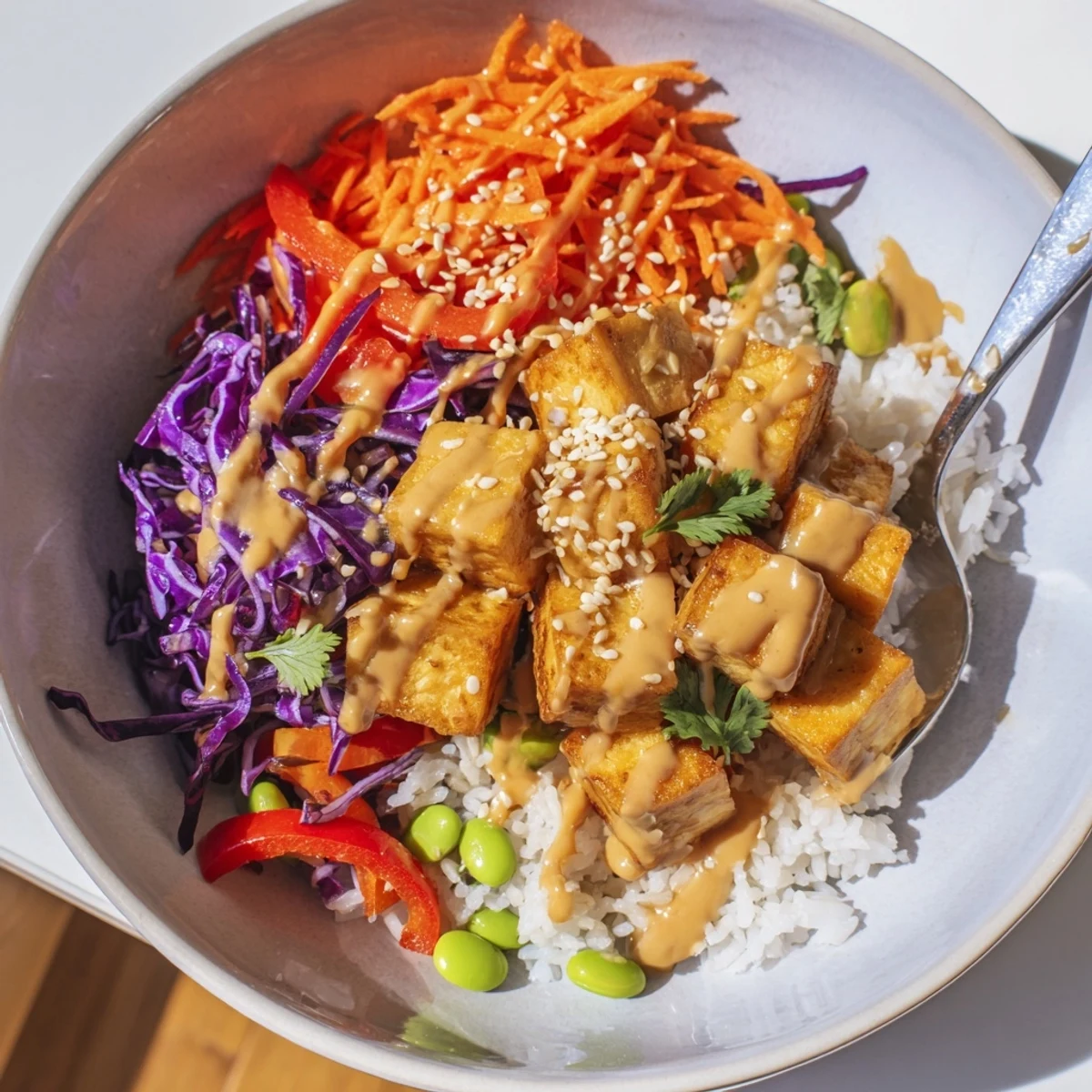
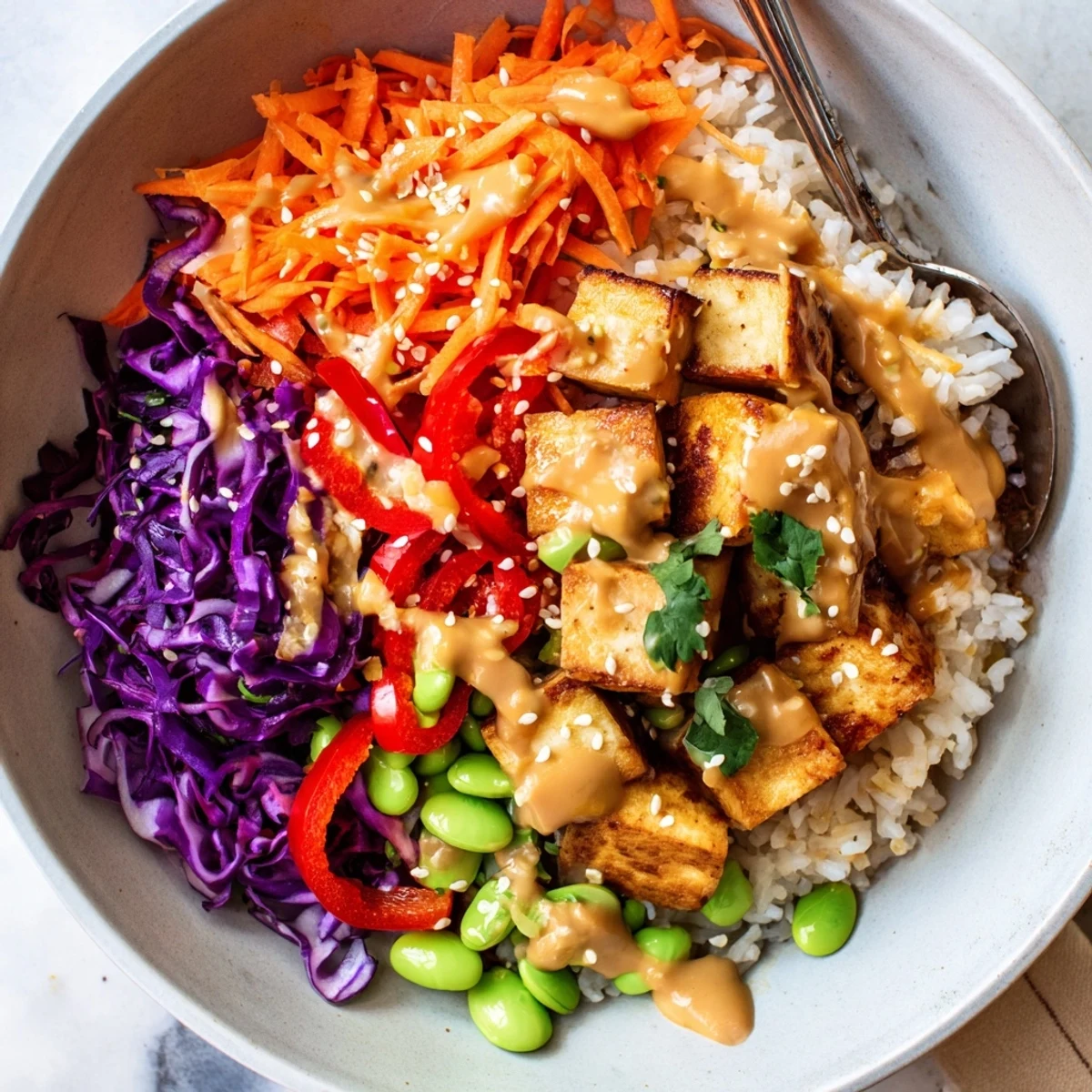
- Divide the fluffy rice among four bowls and arrange the julienned carrot, sliced cabbage, bell pepper, edamame, and spring onions in colorful clusters on top. Pile the crispy tofu in the center, drizzle generously with peanut sauce, and scatter sesame seeds and torn cilantro over everything. Serve right away while the tofu is still warm and crunchy.
 Pin It
 There is something quietly powerful about assembling a bowl this colorful after a gray, unremarkable day. It feels less like cooking and more like resetting.
Choosing the Right Tofu
Firm or extra firm tofu is non negotiable here because softer varieties simply collapse under the weight of the cornstarch coating and the heat of the pan. I learned this the disappointing way with silken tofu, which dissolved into a scrambled mess that still tasted fine but looked deeply sad. If you can find tofu that has been pressed in its packaging, you save yourself a step, but even a quick ten minute press between paper towels under a heavy skillet makes a noticeable difference in how crisply it browns.
Making the Sauce Your Own
The peanut sauce as written is a template you can bend in dozens of directions depending on your mood and pantry. A spoonful of sriracha or a pinch of chili flakes turns up the heat without throwing off the balance. I have swapped peanut butter for almond butter on nights when peanuts felt too heavy and once used tahini in a desperate moment that surprisingly worked beautifully.
Serving and Storing Wisely
If you are packing these bowls for lunch, keep the sauce in a separate small container and the tofu tucked beside the vegetables rather than on top so nothing gets soggy before noon. The rice and vegetables hold well in the refrigerator for up to three days, though the tofu is best eaten within two days and reheated briefly in a dry skillet to revive some crunch.
- Press tofu while you prep vegetables to save time without rushing.
- Double the peanut sauce because you will absolutely want it for leftovers.
- Always taste the sauce before drizzling and adjust lime or salt to your preference.
 Pin It
 This bowl has never let me down, not on busy nights, not for skeptical friends, and certainly not on those evenings when only something colorful and deeply satisfying would do. Keep the sauce recipe close because it will quietly become the most requested thing in your kitchen.
Recipe Questions & Answers
- → Can I use extra-firm tofu instead of firm tofu?
-
Yes, extra-firm tofu works beautifully and actually holds its shape even better during pan-frying. Just be sure to press it well to remove excess moisture before cubing and marinating, which helps achieve a crispier exterior.
- → How do I store leftovers?
-
Store the rice, tofu, vegetables, and peanut sauce in separate airtight containers in the refrigerator for up to 3 days. Reheat the tofu in a skillet to restore crispiness, and gently warm the peanut sauce with a splash of water to loosen it.
- → What can I substitute for peanut butter in the sauce?
-
Sunflower seed butter or almond butter are excellent alternatives if you have a peanut allergy. Coconut aminos can replace soy sauce for a soy-free version. The flavor profile will shift slightly but remains delicious.
- → Can I meal prep this ahead of time?
-
Absolutely. Cook the rice and tofu in advance, prepare the peanut sauce, and chop all vegetables. Keep components separate and assemble when ready to eat. The tofu stays crispy for about a day, so consider reheating it in a dry pan before serving.
- → What other vegetables work well in this bowl?
-
This bowl is very versatile. Try adding steamed broccoli, sautéed mushrooms, sliced cucumber, shredded kale, or avocado. Quick-pickled radishes or red onions also add a wonderful tangy contrast to the rich peanut sauce.
- → How do I make the peanut sauce thinner or thicker?
-
For a thinner sauce, simply add more warm water one tablespoon at a time until you reach your desired consistency. To thicken it, add a bit more peanut butter or let it sit in the fridge, where it will naturally firm up.