
 Pin It
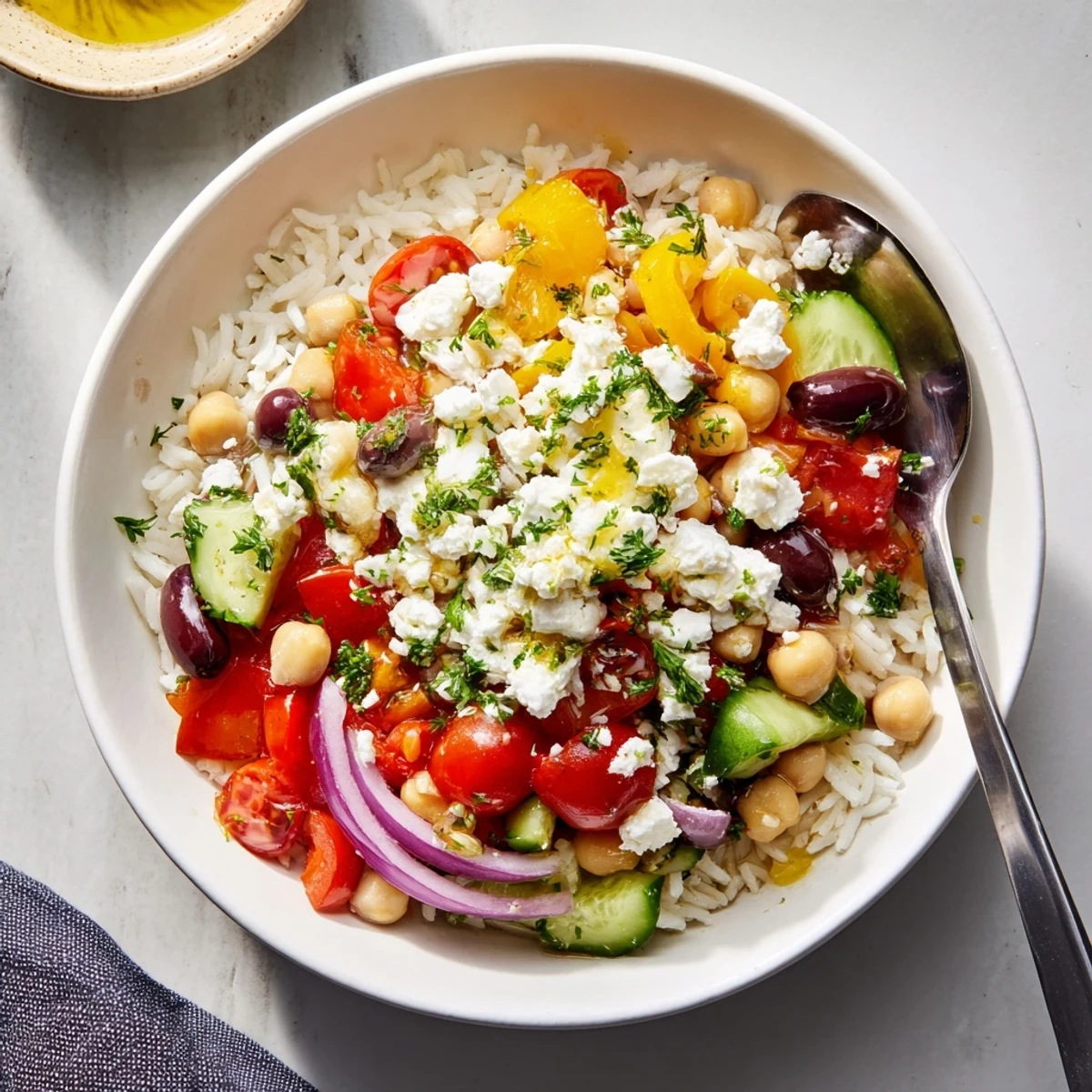
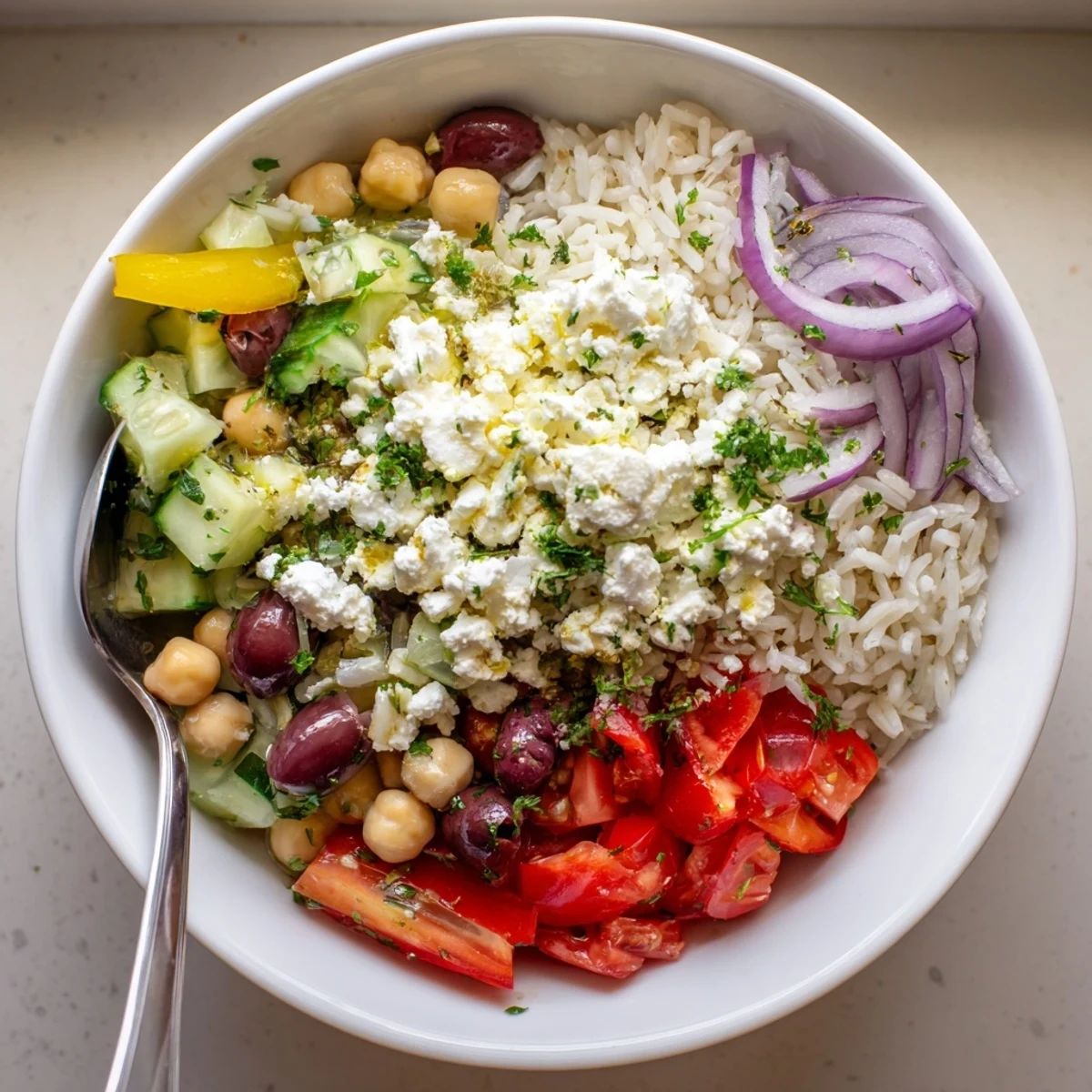
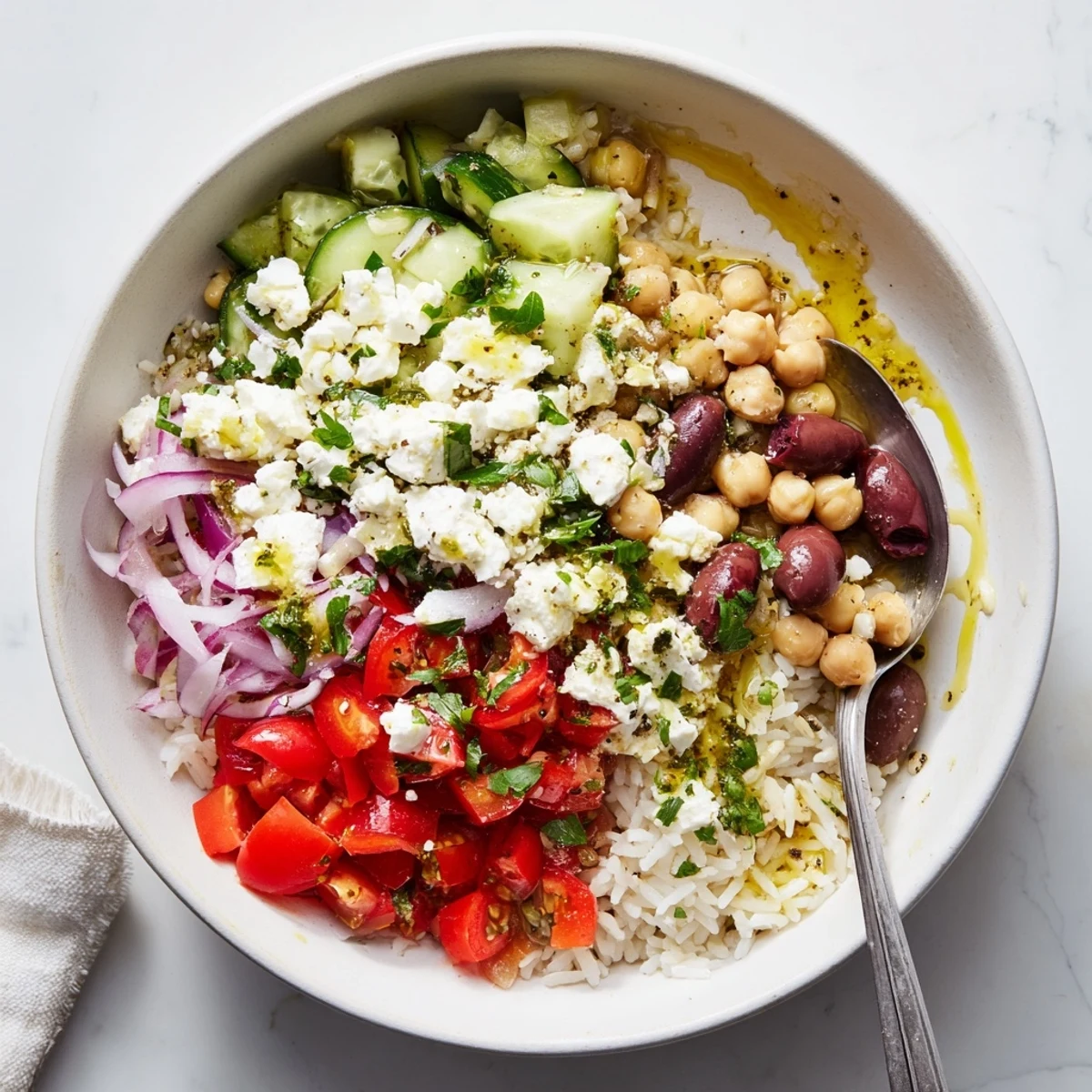
 This Mediterranean rice bowl brings together fluffy long-grain rice with a colorful mix of cherry tomatoes, cucumber, bell pepper, and Kalamata olives. Protein-rich chickpeas and crumbled feta add satisfying substance, while a bright lemon-garlic-oregano dressing ties everything together.
Ready in just 45 minutes with minimal cooking, it's an easy weeknight meal that works served warm or chilled. Naturally vegetarian and gluten-free, it easily adapts to vegan diets by swapping the feta.
The farmer market on Fifth Avenue always smells like someone just squeezed a lemon over everything within a ten foot radius, and one Saturday morning that smell hooked me into buying way too many tomatoes and a fistful of parsley I had no plan for. That afternoon I stood in my kitchen staring at the haul and decided a rice bowl was the only sane solution. It turned into the kind of lunch that makes you close your eyes and chew slowly, which is how I knew it was worth writing down.
My neighbor Dave knocked on my door the following Tuesday asking if I had any leftover because he could smell the lemon and oregano drifting through the hallway. I handed him a bowl, he sat on my porch step eating it in complete silence, and then he asked for the recipe without looking up. That sealed it.
Ingredients
- Long grain white rice (1 cup): Rinsing it until the water runs clear removes excess starch and gives you separate, fluffy grains instead of a sticky clump.
- Water (2 cups) and salt (1/2 teaspoon): The standard two to one ratio works reliably, but taste your water first because heavily mineralized tap water can shift the flavor.
- Cherry tomatoes (1 cup, halved): Their sweetness concentrates when they sit in the dressing, so halving them a few minutes early is actually a good move.
- English cucumber (1, diced): English cucumbers have fewer seeds and thinner skin, which means no peeling and no watery puddle at the bottom of your bowl.
- Red bell pepper (1, chopped): The crunch is what matters here, so chop it small enough that you get some in every bite but not so small it disappears.
- Red onion (1/2 small, thinly sliced): Soak the slices in cold water for five minutes if you find raw onion too aggressive, and it mellows the bite without killing the flavor.
- Canned chickpeas (1 cup, drained and rinsed): Rinsing removes the canning liquid that tastes tinny and makes the chickpeas feel clean and earthy instead.
- Kalamata olives (1/4 cup, pitted and halved): Check every olive for pits even if the jar says pitted, because biting into one is a fast way to ruin a good lunch.
- Fresh parsley (1/4 cup, chopped): Flat leaf parsley has more flavor than curly, and you should add it right before serving so it stays bright and perky.
- Feta cheese (1/2 cup, crumbled): Buy the kind packed in brine if you can find it because the texture is creamier and the tang is sharper than pre crumbled varieties.
- Extra virgin olive oil (3 tablespoons): This is not the place for your cheapest bottle since the dressing is raw and the oil flavor comes through completely unmasked.
- Fresh lemon juice (2 tablespoons): Roll the lemon hard on the counter before juicing to break the membranes inside and get significantly more liquid out.
- Garlic (1 clove, minced): One clove is enough to warm the dressing without taking over, and mincing it very fine prevents any harsh raw bites.
- Dried oregano (1 teaspoon), salt (1/2 teaspoon), and black pepper (1/4 teaspoon): Crush the oregano between your fingers as you add it to wake up the oils and distribute the flavor more evenly.
Instructions
- Get the rice going:
- Rinse the rice under cold running water, swishing it with your hand until the cloudiness disappears. Combine it with the water and salt in a medium saucepan, bring it to a boil, then clamp on the lid, drop the heat to low, and let it simmer undisturbed for 15 to 18 minutes until tender. Fluff with a fork and let it cool slightly while you work on everything else.
- Whisk the dressing:
- In a small bowl, combine the olive oil, lemon juice, minced garlic, oregano, salt, and pepper and whisk until the mixture looks cloudy and unified rather than separated. Give it a taste on the tip of a spoon and adjust the salt or lemon if it needs more punch.
- Prep all the vegetables:
- Halve the cherry tomatoes, dice the cucumber, chop the bell pepper into small squares, slice the red onion as thin as you can manage, and give the parsley a rough chop. Spread everything out on your cutting board so you can see the full color range before it goes in the bowl.
- Toss the salad base:
- In a large bowl, combine the tomatoes, cucumber, bell pepper, red onion, chickpeas, olives, and parsley. Pour half the dressing over the top and toss gently with your hands or a large spoon until every piece glistens.
- Build the bowls:
- Divide the fluffed rice among four bowls, spoon the dressed vegetable mixture generously over each one, and scatter crumbled feta on top. Drizzle the remaining dressing over everything and serve right away, or tuck them into the fridge for an hour if you prefer the cold version.
 Pin It
 The second time I made these bowls I packed one in a mason jar and took it to the park, and a woman on the bench next to me asked what smelled so good that she was willing to sound strange asking a stranger about his lunch.
Making It Your Own
This bowl is forgiving by nature, which means you can swap almost anything and still land somewhere delicious. Quinoa works beautifully if you want more protein per bite, and couscous gets dinner on the table even faster since it only needs five minutes of steeping. Grilled chicken or shrimp turns it from a light lunch into a proper dinner without changing anything else.
Storing Leftovers
Keep the rice and the vegetable mixture in separate containers if you plan to eat it the next day, because everything will keep its texture better that way. The dressing holds in a small jar in the fridge for up to a week and tastes even better after a day of sitting. Feta should be stored on its own so it does not dissolve into a salty paste overnight.
What to Pair It With
A chilled glass of Sauvignon Blanc cuts right through the richness of the olive oil and feta, and a dry rose works just as well if that is what you have cold. Warm pita bread on the side turns the bowl into something you can scoop and share, which is how I ended up serving it most often.
- Toast the pita directly over a gas flame for thirty seconds per side for the best char and flexibility.
- A dollop of hummus swirled into the bowl adds creaminess that ties everything together.
- Always serve with a lemon wedge on the side because someone will want more brightness.
 Pin It
 Some meals are just food, but this bowl has a way of slowing people down and making them sit a little longer at the table. That is really all I ever want from a recipe.
Recipe Questions & Answers
- → Can I use brown rice instead of white rice?
-
Yes, brown rice works beautifully and adds extra fiber. Keep in mind it takes longer to cook — about 35 to 40 minutes compared to 15 to 18 minutes for white rice. Adjust your timing accordingly.
- → How should I store leftovers?
-
Store leftovers in an airtight container in the refrigerator for up to 3 days. The rice bowl is delicious served cold, making it perfect for meal prep and next-day lunches.
- → What can I substitute for feta cheese?
-
For a vegan version, use crumbled tofu seasoned with lemon juice and nutritional yeast, or a store-bought vegan feta. You can also try crumbled goat cheese or cotija for a different flavor profile.
- → Can I add protein to make it more filling?
-
Absolutely. Grilled chicken, shrimp, or salmon pair wonderfully with the Mediterranean flavors. For a plant-based boost, add roasted chickpeas, hummus, or marinated tofu.
- → Is this dish served warm or cold?
-
Either way works well. Serve it warm right after assembling for a comforting meal, or chill it for a refreshing cold rice bowl. Both versions highlight the fresh vegetables and bright dressing beautifully.
- → What dressing variations can I try?
-
Try adding a spoonful of Dijon mustard for extra tang, swap lemon juice for red wine vinegar, or stir in a dollop of tahini for creaminess. A pinch of sumac or za'atar also adds authentic Mediterranean depth.