
 Pin It
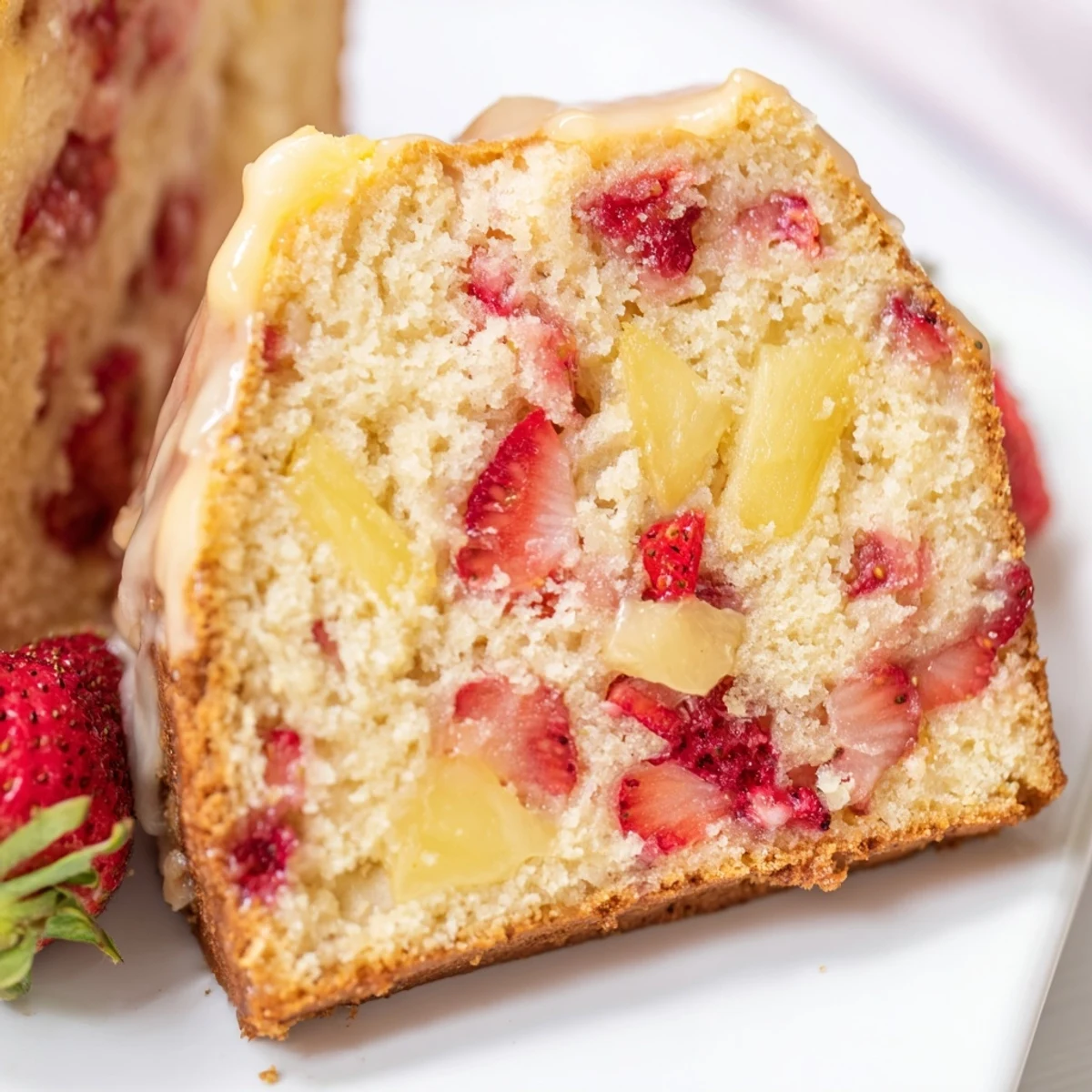
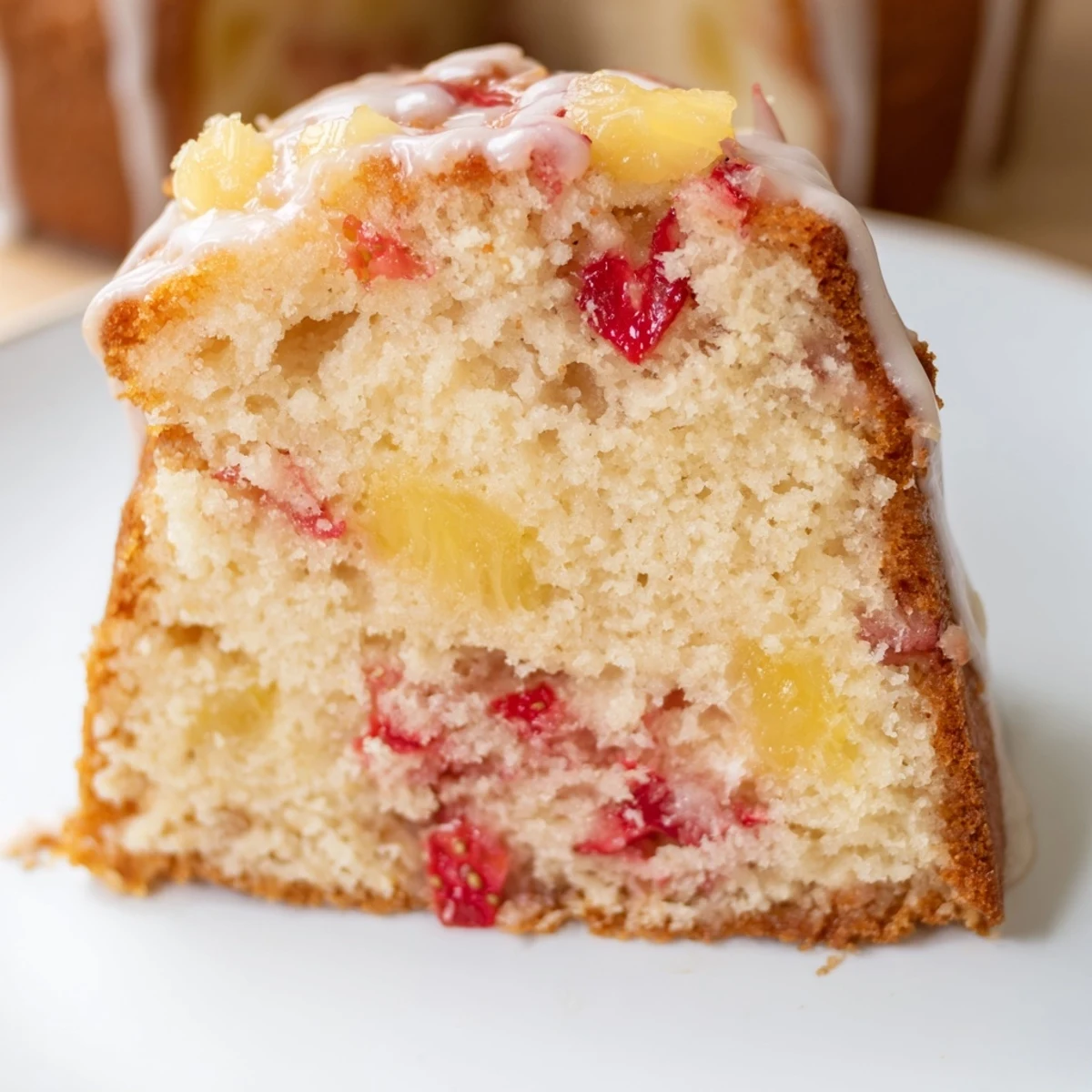
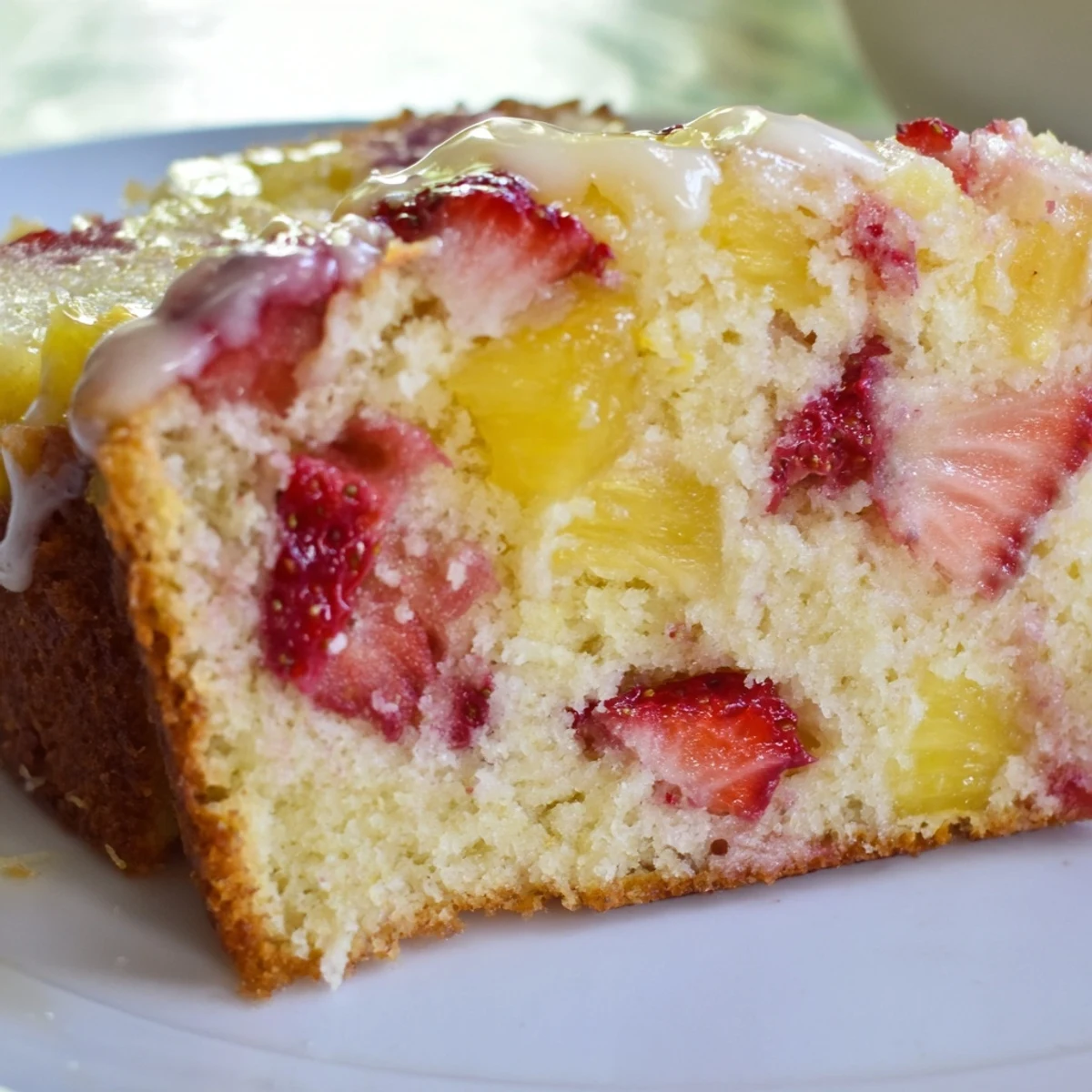
 Bask in the flavors of spring and summer with this moist, tender pound cake that balances sweet strawberries with bright, tangy pineapple. The dense buttery crumb stays incredibly moist thanks to sour cream, while pieces of fruit distribute jewel-like bursts throughout every slice.
Perfect for backyard barbecues, brunch spreads, or afternoon tea, this cake comes together in just 20 minutes of active prep time. The optional pineapple glaze adds an extra layer of fruity sweetness and makes for a beautiful presentation.
Bake it in a loaf pan for everyday slicing or use a bundt pan for an elegant dessert that looks stunning on any dessert table. Leftovers keep well for days, though this crowd-pleasing cake rarely lasts long.
The afternoon sun hit my kitchen window just right as I pulled this cake from the oven, that golden crust catching the light while the scent of warm strawberries filled every corner of the room. My daughter had been begging me to use the leftover pineapple from her breakfast, and I'll admit I was skeptical about combining it with strawberries in a pound cake. But watching her eyes light up when she took that first bite, still warm from the oven, made me realize sometimes the most unexpected combinations become the ones we crave most.
Last summer, I brought this cake to a neighborhood potluck, and within five minutes, three different people had cornered me asking for the recipe. There's something about the combination of tart pineapple and sweet strawberries that makes people instantly nostalgic, even if they've never tried it before. One neighbor told me it reminded her of her grandmother's kitchen, which I think might be the highest compliment a bake can receive.
Ingredients
- Fresh strawberries (150 g): The flour coating trick prevents them from sinking to the bottom during baking, ensuring even distribution throughout the cake
- Diced pineapple (175 g): Fresh pineapple gives the brightest flavor, but if you use canned, drain it thoroughly and pat those pieces dry with paper towels
- All-purpose flour (315 g): Spoon and level your flour instead of scooping directly, which prevents packing and keeps the texture light rather than dense
- Baking powder (2 tsp): This is what gives pound cake its lift, so check your expiration date if it's been sitting in your pantry for months
- Unsalted butter (225 g): Room temperature butter is non-negotiable here—it should give slightly when pressed but still hold its shape
- Granulated sugar (400 g): The creaming process with butter creates tiny air pockets that make all the difference between a heavy brick and tender crumbs
- Large eggs (4): Cold eggs can cause your butter to seize and curdle, so let them sit on the counter for at least 30 minutes before starting
- Whole milk (60 ml): Room temperature ingredients emulsify better, creating a smoother, more uniform batter
- Sour cream (120 g): This is the secret ingredient that keeps the cake moist and adds a subtle tang that balances all that sweetness
- Pure vanilla extract (2 tsp): Don't skimp here—real vanilla extract makes such a noticeable difference compared to imitation
- Powdered sugar (120 g): For the glaze, start with 2 tablespoons of pineapple juice and add more only if needed for that perfect drizzling consistency
Instructions
- Prep your baking vessel:
- Generously grease every corner and crevice of your pan with butter, then dust with flour, tapping out the excess—this insurance policy ensures your cake releases beautifully every single time
- Coat the fruit in flour:
- Toss your diced strawberries and pineapple with just 2 tablespoons of flour until they're dusted in a light white coating, which suspends them throughout the batter instead of letting them sink like stones
- Whisk your dry foundation:
- In a separate bowl, combine the remaining flour with baking powder and salt, whisking until everything is uniformly blended and no clumps remain
- Create the butter-sugar base:
- Beat that softened butter and sugar together for a full 3 to 4 minutes, stopping to scrape down the bowl halfway through, until the mixture turns pale and fluffy like soft clouds
- Add eggs one at a time:
- Drop each egg into the mixture individually, beating completely before adding the next, which ensures proper emulsification and prevents that curdled look
- Incorporate vanilla and sour cream:
- Pour in the vanilla and sour cream, mixing just until combined—you want to maintain all that air you worked so hard to create
- Alternate wet and dry ingredients:
- Add the flour mixture in three parts, alternating with two additions of milk, beginning and ending with flour, and mixing only until the flour streaks just disappear
- Fold in the prepared fruit:
- Gently incorporate those flour-coated strawberries and pineapple with a spatula, using folding motions that lift from underneath to avoid crushing the delicate pieces or deflating the batter
- Bake to golden perfection:
- Pour and smooth the batter, then bake for 55 to 65 minutes, tenting with foil at the 40-minute mark if the top is browning faster than the center is setting
- The patience of cooling:
- Let the cake rest in its pan for exactly 15 minutes before inverting onto a wire rack—this brief cooling period helps the structure set so it doesn't collapse when unmolded
- Glaze if desired:
- Whisk powdered sugar with pineapple juice until smooth and pourable, then drizzle generously over the completely cooled cake, letting it cascade down the sides
 Pin It
 My grandmother would sit at her kitchen table, watching the oven window like it was her favorite television show, always knowing exactly when something was done by the way it smelled. Now I find myself doing the same thing, hovering and checking, and I think that's part of what makes baking feel so special—it connects us to all the hands that baked before us.
Making It Your Own
The beauty of this pound cake is its adaptability. I've swapped blueberries for strawberries when they were on sale, added coconut flakes to complement the pineapple, and even thrown in some chopped pecans for extra crunch. Each variation feels like discovering a new recipe while staying grounded in something familiar and comforting.
Storage Secrets
This cake actually tastes better on day two, as the moisture from the fruit redistributes throughout the crumb. Wrap it tightly in plastic wrap or store in an airtight container at room temperature for up to three days. If you're planning to keep it longer, slice and freeze individual pieces—just thaw at room temperature for an hour and you'd never know they'd seen the inside of a freezer.
Serving Suggestions
While this cake is perfectly divine on its own, a dollop of freshly whipped cream turns it into something dessert-worthy. A scoop of vanilla ice cream melting into a warm slice is not to be underestimated, especially after an evening BBQ. For brunch, I like to serve it alongside a fruit salad that echoes the strawberries and pineapple inside the cake.
- Toast leftover slices and spread with a little salted butter for breakfast
- Crumble slightly stale pieces over vanilla ice cream for an instant strawberry shortcake
- Cube and use as the base for a bread pudding that will make your house smell incredible
 Pin It
 There's something profoundly satisfying about a recipe that comes together simply but tastes like it took all day. This cake has become my go-to for bringing a little sunshine to any table, any season, any reason at all.
Recipe Questions & Answers
- → Can I use frozen strawberries instead of fresh?
-
Yes, frozen strawberries work well in this cake. Thaw them completely and drain thoroughly before dicing. Excess moisture can make the cake dense, so pat them dry with paper towels after draining.
- → How do I know when the cake is done baking?
-
Insert a toothpick into the center of the cake—if it comes out clean or with just a few moist crumbs, it's ready. The top should be golden brown and the cake should pull away slightly from the pan edges.
- → Can I make this cake ahead of time?
-
Absolutely. This pound cake actually tastes better the next day as flavors meld. Wrap it tightly in plastic wrap and store at room temperature for up to 3 days. Add the glaze just before serving for the freshest appearance.
- → What's the purpose of tossing fruit in flour?
-
Coating the strawberries and pineapple in flour prevents them from sinking to the bottom during baking. This simple step ensures even distribution of fruit throughout every slice.
- → Can I substitute the sour cream?
-
Yes, Greek yogurt makes an excellent substitute for sour cream with similar tang and moisture content. You can also use full-fat plain yogurt, though the texture may be slightly lighter.
- → Why did my cake sink in the middle?
-
Sinking usually indicates underbaking or opening the oven door too early. Make sure your oven is properly calibrated and avoid checking the cake before the minimum baking time. A thermometer testing 200-210°F in the center ensures doneness.