
 Pin It
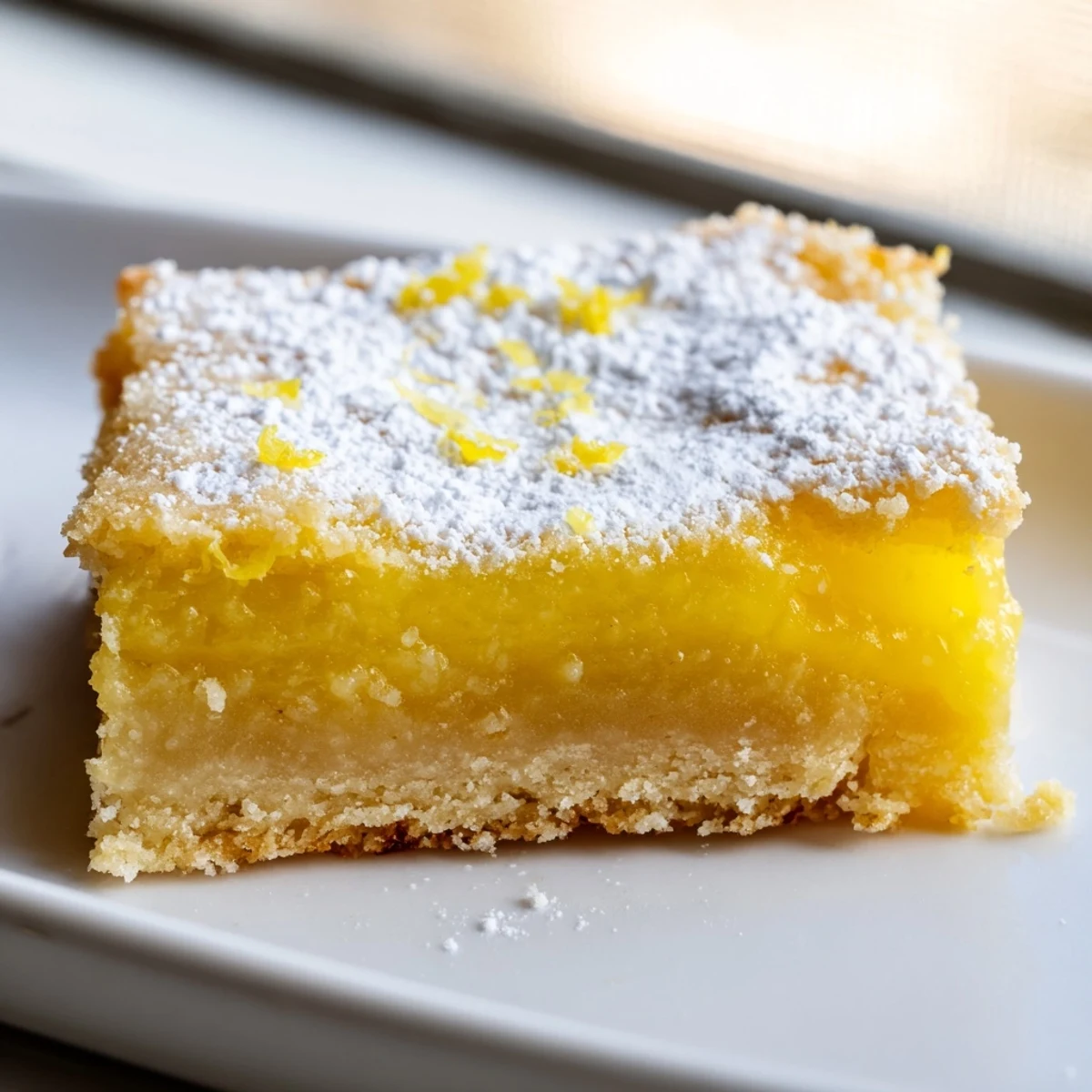
 These bright lemon bars feature a buttery shortbread crust topped with a tangy, citrus-forward filling made from fresh lemon juice and zest. The crust is baked until golden, then the silky lemon filling is poured over while still hot and baked until just set.
Ready in under an hour with simple pantry ingredients, they yield 12 generous squares perfect for potlucks, picnics, or afternoon treats. Dust with powdered sugar before serving for a classic finish.
The screen door slapped shut behind me and the kitchen smelled like cleaning solution and possibility. My neighbor had just dropped off a grocery bag bulging with lemons from her backyard tree, and I stood there counting them like gold. Seventeen lemons is a lot for one person, so I pulled out a 9x13 pan and decided to solve this problem the only way I know how.
I brought a pan of these to a potluck once and watched a woman eat three bars while pretending to help clean up. She later told me she had driven home with the windows down because she swiped an extra one for the road and the powdered sugar got everywhere.
Ingredients
- Unsalted butter (1 cup, softened): This is the backbone of the shortbread, so use a butter you would happily eat on good bread. Let it truly soften at room temperature, not in the microwave where it turns into a puddle.
- Granulated sugar (1/2 cup for crust, 1 1/2 cups for filling): The crust sugar is minimal on purpose to let the butter shine, while the filling sugar tames the sharpness of the lemon juice.
- All-purpose flour (2 cups for crust, 1/4 cup for filling): Two separate jobs here: the bulk amount builds structure in the crust, and the small amount in the filling helps it set without turning rubbery.
- Salt (1/4 tsp): Just enough to keep the shortbread from tasting flat. Do not skip it even though it seems like nothing.
- Large eggs (4): They give the filling its custardy body. Use room temperature eggs so they blend smoothly into the sugar mixture.
- Fresh lemon juice (2/3 cup, about 3 to 4 lemons): Bottled juice tastes flat and metallic here. Squeeze real lemons and strain out the seeds, because biting into a seed mid-dessert is a disappointment nobody needs.
- Lemon zest (1 tbsp, finely grated): This is where the perfume lives. Zest before you juice, and stop at the yellow layer because the white pith underneath is bitter.
- Powdered sugar (for dusting): Apply it right before serving so it stays white and snowy instead of melting into the surface.
Instructions
- Get your pan ready:
- Preheat the oven to 350°F (175°C). Line a 9x13-inch baking pan with parchment paper, leaving enough overhang on the sides to grab like handles later. This one step saves you from the nightmare of bars stuck to the pan.
- Build the shortbread crust:
- In a medium bowl, cream the softened butter and half cup of sugar together until the mixture looks pale and fluffy. Dump in the flour and salt, then mix until everything clumps into a crumbly dough that holds together when you squeeze it.
- Press and blind bake:
- Press the dough firmly and evenly across the bottom of the lined pan using your palms or the back of a measuring cup. Bake for 18 to 20 minutes until the edges turn a gentle golden brown and your kitchen starts smelling like a bakery.
- Whisk the lemon filling:
- While the crust bakes, whisk the eggs and 1 1/2 cups of sugar in a large bowl until completely blended and slightly frothy. Add the quarter cup of flour and whisk until smooth with no lumps, then stir in the lemon juice and zest until everything is unified and fragrant.
- Combine and finish baking:
- Take the hot crust from the oven and reduce the temperature to 325°F (160°C). Pour the lemon filling directly over the warm crust and slide the pan back into the oven for another 18 to 20 minutes until the center is set and no longer wobbles when you gently shake the pan.
- Cool, cut, and finish:
- Let the bars cool completely in the pan on a wire rack, which takes patience but is nonnegotiable if you want clean edges. Use the parchment overhang to lift the whole slab out, then cut into 12 squares and dust generously with powdered sugar right before serving.
 Pin It
 There is something about a plate of lemon bars on a warm afternoon that makes people linger at the table a little longer than they planned.
Making Them Your Own
Swap the lemon juice for lime and add a teaspoon of toasted coconut to the crust for a tropical version that disappeared at my last barbecue. Orange juice works too, though it creates a sweeter, gentler bar that leans more toward afternoon tea than summer picnic.
Storage That Actually Works
These bars keep beautifully in the fridge for up to four days if you layer them between sheets of parchment in an airtight container. They also freeze surprisingly well for up to three months, though the powdered sugar will dissolve upon thawing so dust them fresh after they defrost.
Getting The Texture Right
The most common complaint is a filling that turns out rubbery or weepy, and almost every time the culprit is overbaking. Pull the pan when the center has just the faintest shimmer left, because carryover heat will finish the job.
- Use fresh lemons only, because the flavor difference is immediately obvious to anyone paying attention.
- An oven thermometer is worth owning since most ovens lie about their true temperature.
- Let the bars chill for an hour in the fridge before cutting for the cleanest squares you have ever seen.
 Pin It
 Every lemon has a different personality, so taste your juice before you mix it in and adjust your expectations accordingly. These bars are forgiving, bright, and absolutely worth the small effort they ask of you.
Recipe Questions & Answers
- → How do I know when the lemon filling is fully baked?
-
The filling is done when the center is set and no longer jiggles when you gently shake the pan. The edges should be slightly golden, and a toothpick inserted in the center should come out clean.
- → Can I use bottled lemon juice instead of fresh?
-
Fresh lemon juice delivers the brightest, most vibrant flavor. Bottled juice works in a pinch but will result in a less pronounced citrus taste. Always use fresh zest regardless, as bottled alternatives lack the essential oils that provide aroma.
- → Why did my shortbread crust crumble when pressing it into the pan?
-
The dough is intentionally crumbly. Press it firmly and evenly using your hands or the back of a measuring cup. The butter will melt during baking, binding the crust together into a cohesive layer.
- → How should I store leftover lemon bars?
-
Store them in an airtight container in the refrigerator for up to 4 days. The chilled texture is actually quite pleasant. You can also freeze them for up to 3 months by wrapping individual squares tightly in plastic wrap.
- → Can I substitute lime or orange for the lemon?
-
Absolutely. Lime juice and zest create a more tropical, tart variation, while orange yields a sweeter, milder citrus bar. Adjust the sugar slightly if using orange, as it is naturally less acidic than lemon.
- → Do I need to let the bars cool completely before cutting?
-
Yes, patience is key. Cooling completely allows the filling to set firmly so you get clean, neat squares. Rushing this step will result in messy, gummy edges. Refrigerating for an hour before slicing helps even more.