
 Pin It
 This artisan sourdough combines the tangy complexity of naturally fermented dough with aromatic basil pesto and savory Parmesan. The preparation involves an initial autolyse period, followed by a series of stretch-and-folds to develop gluten strength. After the dough has rested, it's layered with pesto and rolled into a log, creating beautiful swirls throughout the loaf.
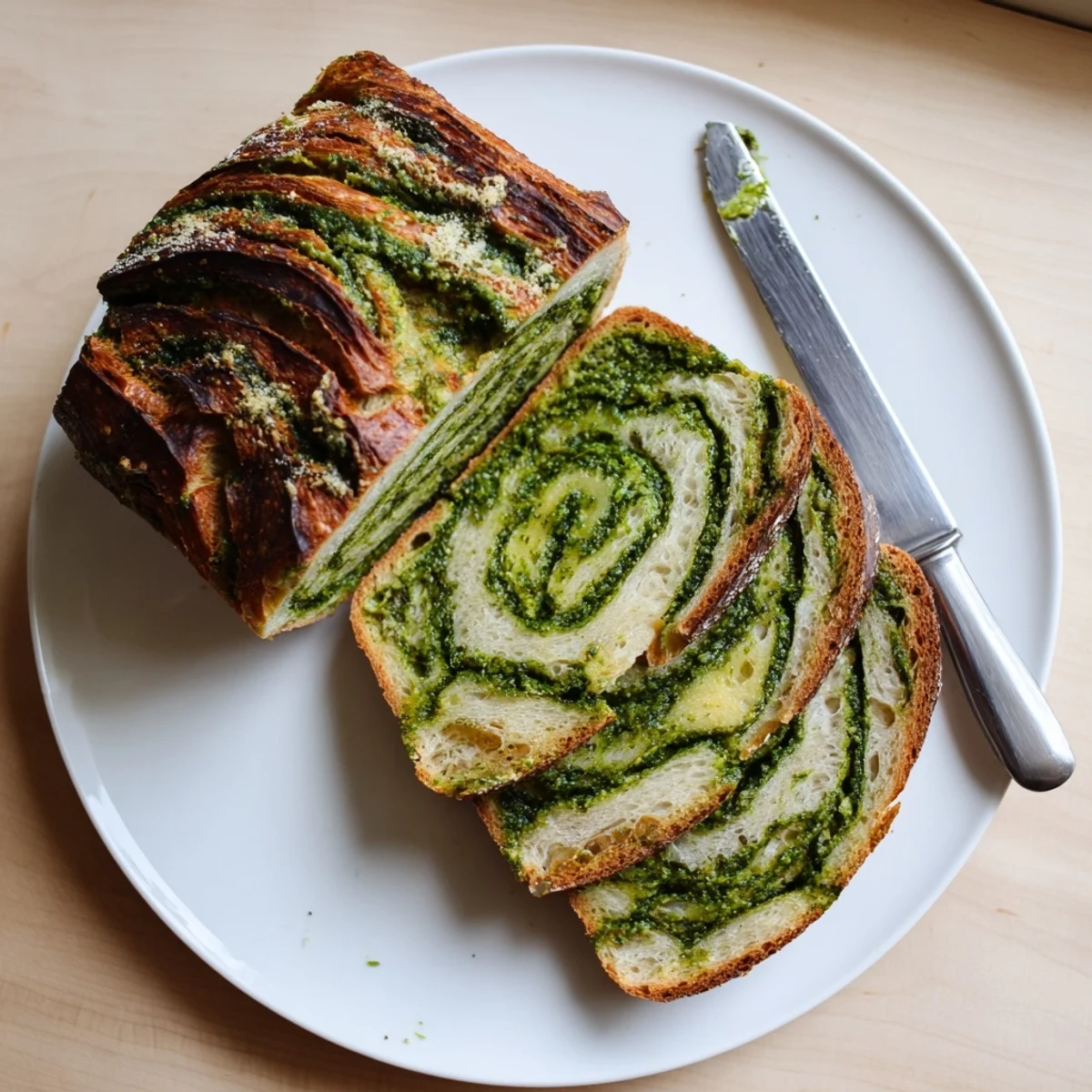
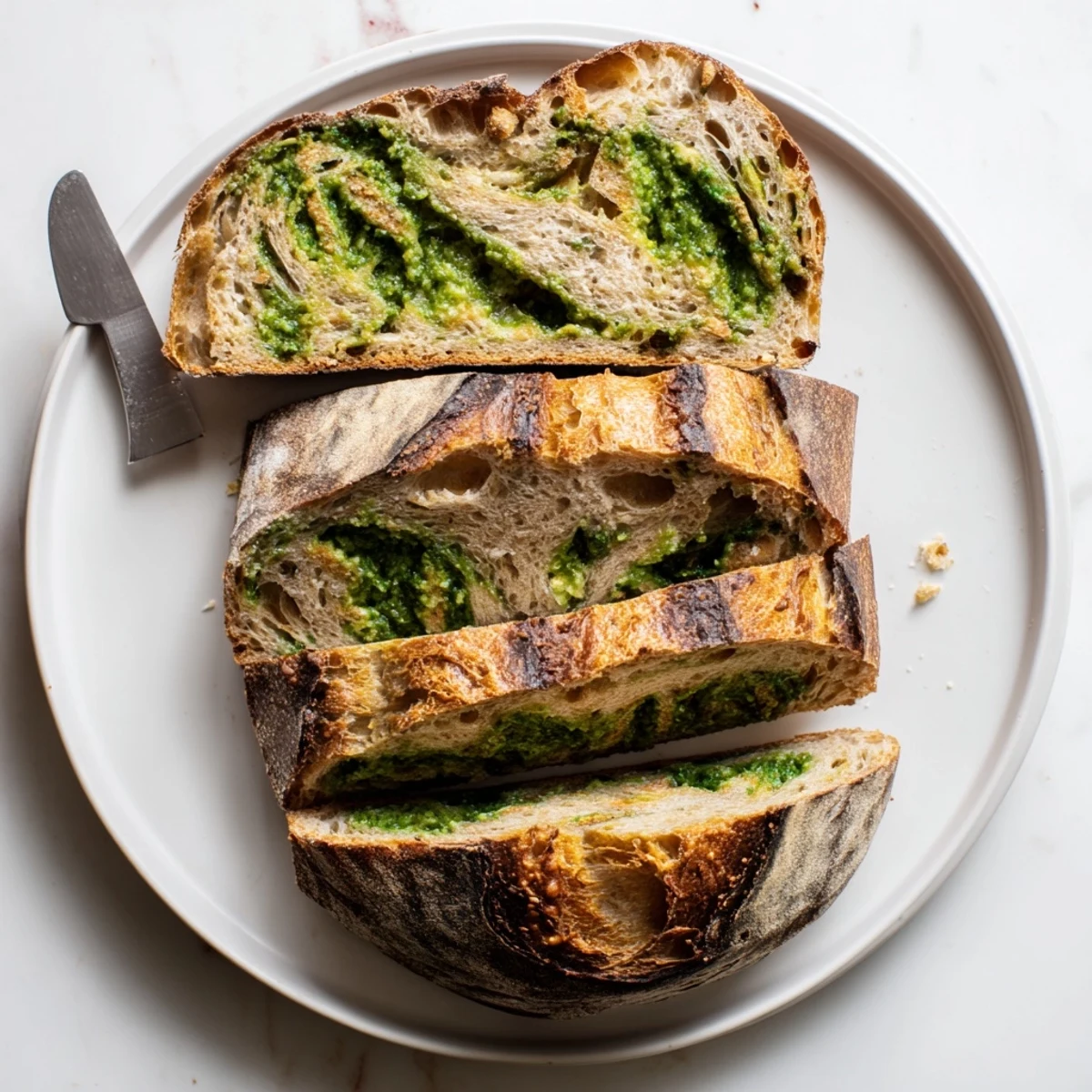
The overnight refrigeration option allows flavors to deepen while developing a subtly tangy profile. Baking in a preheated Dutch oven creates that coveted crispy crust and airy interior. The finished loaf features a golden Parmesan-crusted exterior with vibrant green pesto ribbons throughout each slice.
This versatile bread shines alongside pasta dishes, as a base for gourmet sandwiches, or simply torn and shared with olive oil for dipping. The vegetarian preparation yields approximately 8-10 substantial slices.
My kitchen smelled like an Italian herb garden the morning I first attempted pesto bread. I had extra basil from the farmers market and a sourdough starter that needed feeding, so I just went for it. The way that green swirl bakes into the crumb still feels like magic every time I slice into it.
I brought this loaf to a dinner party once, and within five minutes, someone had already asked for the recipe. We stood around the kitchen island just tearing off pieces while the cheese was still warm and gooey. Something about that combination of tangy sourdough and bright basil makes people gather close.
Ingredients
- 500 g bread flour: High protein flour gives this bread structure to hold all that filling
- 350 ml lukewarm water: Warm water wakes up your starter and helps hydration
- 100 g active sourdough starter: Use starter at its peak bubbly stage for the best rise
- 10 g fine sea salt: Dont skip or reduce this, it balances the pesto beautifully
- 70 g basil pesto: Homemade is lovely but a good jarred pesto works perfectly here
- 50 g freshly grated Parmesan cheese: Freshly grated melts better than pre shredded stuff
- 1 tbsp olive oil: Helps that final Parmesan topping turn golden and crisp
Instructions
- Mix your dough base:
- Combine the bread flour and water in a large bowl, stirring just until the flour disappears. Cover it up and walk away for 30 to 45 minutes. This rest period called autolyse helps the flour absorb water deeply.
- Build the dough:
- Add your starter and salt to the bowl. Mix thoroughly by hand or with a dough hook until everything is well incorporated and the dough starts to feel cohesive.
- Stretch and fold:
- Every 30 minutes for 2 hours, grab one edge of the dough and stretch it up then fold it over the center. Rotate the bowl and repeat four times per set. Keep the dough covered between these sessions.
- Final rest:
- After your last fold, let the dough rest at room temperature for 1 hour. It should look puffy and relaxed.
- Shape the rectangle:
- Turn the dough onto a lightly floured surface. Gently press and stretch it into a rough rectangle. Do not rush this part.
- Layer the flavor:
- Spread your pesto evenly over the dough, leaving about a 2 cm border around the edges. Sprinkle 40 g of your Parmesan right on top of the pesto.
- Roll it up:
- Starting from the short end, roll the dough into a tight log. Shape it into either a round boule or an oval batard, depending on your banneton shape.
- Second rise:
- Place your dough seam side up into a well floured banneton or bowl lined with a floured towel. Cover and let rise for 2 to 3 hours, or refrigerate overnight for deeper flavor development.
- Preheat properly:
- Heat your oven to 230°C (450°F) with your Dutch oven or baking stone inside. Getting everything super hot creates that stunning oven spring.
- Finish and score:
- Turn the dough out onto parchment paper. Brush the top with olive oil and sprinkle with the remaining Parmesan. Score the loaf however you like.
- Bake with steam:
- Bake in your preheated Dutch oven with the lid on for 20 minutes. Remove the lid and bake another 18 to 20 minutes until the crust is deeply golden and the cheese on top has browned.
- Cool completely:
- Let the bread cool on a wire rack for at least an hour before slicing. Cutting while warm will release too much steam and make the crumb gummy.
 Pin It
 This bread has become my go to when I want to make something that looks impressive but does not require fancy techniques. I love pulling it from the oven and hearing that first crackle of the crust cooling down.
Choosing Your Pesto
Homemade pesto gives you control over the garlic and cheese levels, which matters since this bread bakes for a long time. But honestly a good quality store bought version saves time and still produces gorgeous results. I have used sun dried tomato pesto too, which turns the crumb into this beautiful reddish pink swirl that looks incredible on a bread board.
Shaping For Maximum Swirl
When you roll the dough, try to keep it tight so those pesto layers stay distinct. I have learned the hard way that a loose roll creates big gaps instead of pretty swirls. Also do not be afraid to use plenty of flour on your work surface because that sticky pesto wants to make everything messy.
Serving Ideas
This bread makes the most extraordinary grilled cheese you will ever eat. I also love slicing it thin and toasting rounds for crostini topped with fresh tomato and a drizzle of balsamic. Some days I just eat it plain while standing over the kitchen counter.
- Leftovers freeze beautifully wrapped tightly and thawed at room temperature
- Serve it alongside minestrone or tomato soup for a complete meal
- It keeps well for 2 days wrapped in cloth, though the crust will soften
 Pin It
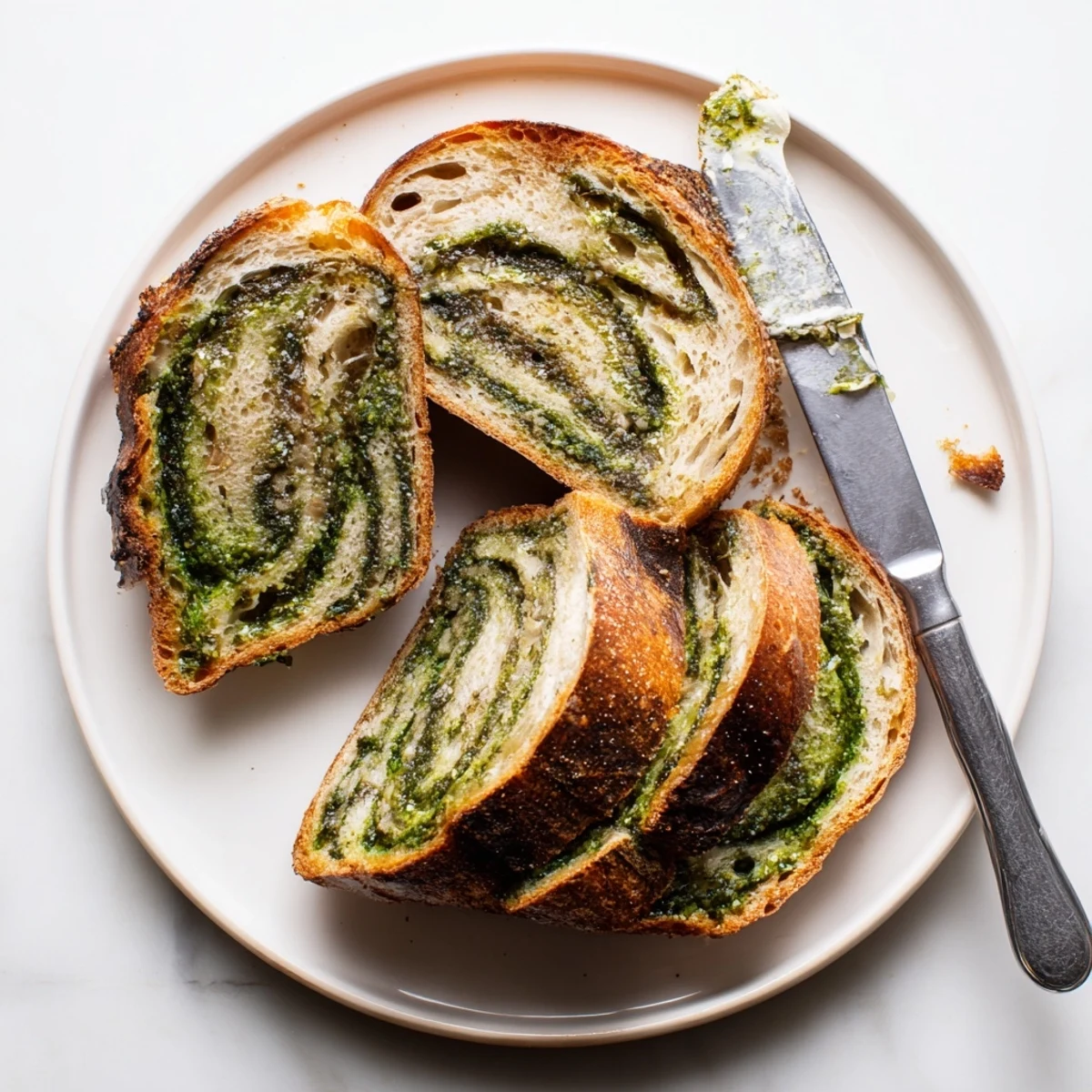
 There is something deeply satisfying about cutting into that first slice and seeing exactly how the swirl turned out. Enjoy every bite of this green and golden beauty.
Recipe Questions & Answers
- → What makes this sourdough different from regular bread?
-
The natural fermentation process using a sourdough starter creates distinctive tangy flavors and improves digestibility. The wild yeast develops over several hours, producing a chewy texture and crisp crust that commercial yeast cannot replicate.
- → Can I use store-bought pesto instead of homemade?
-
Absolutely. Quality store-bought basil pesto works beautifully in this dough. Look for brands with minimal additives and vibrant green color. You can also experiment with sun-dried tomato or walnut pesto variations for different flavor profiles.
- → Why is the rising time so long?
-
Sourdough requires extended fermentation because wild yeast works more slowly than commercial yeast. This slower process develops complex flavors, breaks down gluten for better digestibility, and creates the characteristic open crumb structure that makes artisan sourdough so special.
- → What can I use if I don't have a Dutch oven?
-
A baking stone or heavy baking sheet preheated in a very hot oven works well. You can also create a steam chamber by placing a metal pan of boiling water on the bottom rack while baking. The steam helps develop a crispy, golden crust.
- → How should I store this bread?
-
Store at room temperature in a paper bag or wrapped in a cloth for up to 2 days. For longer storage, slice and freeze in an airtight container. Avoid plastic bags at room temperature as they trap moisture and make the crust soggy. Reheat frozen slices in a toaster oven.
- → Can I reduce the rising time?
-
While you can add a small amount of commercial yeast to speed up the process, this compromises the authentic sourdough character and flavor development. The long fermentation is essential for the traditional texture and taste that makes this bread special.