
 Pin It
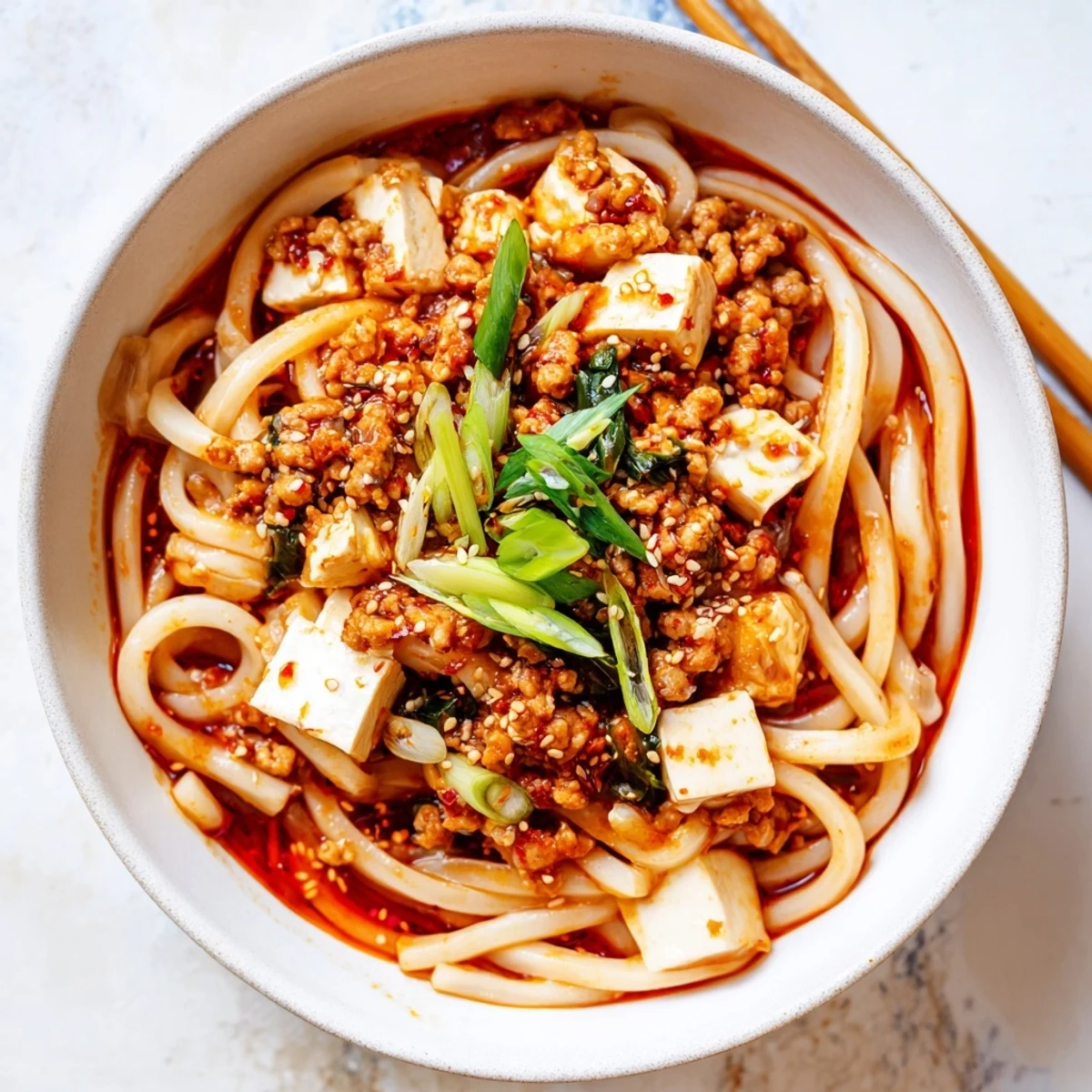
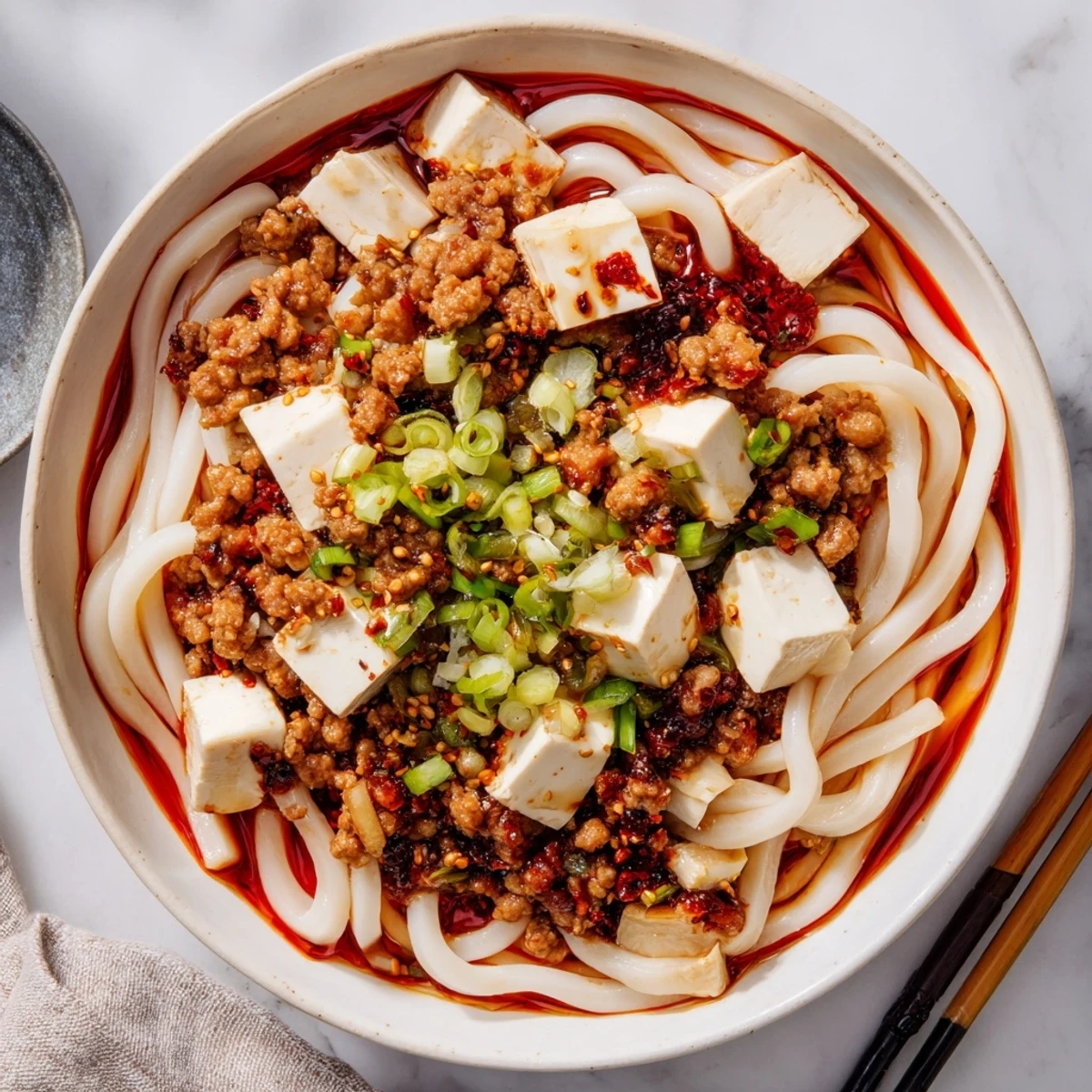
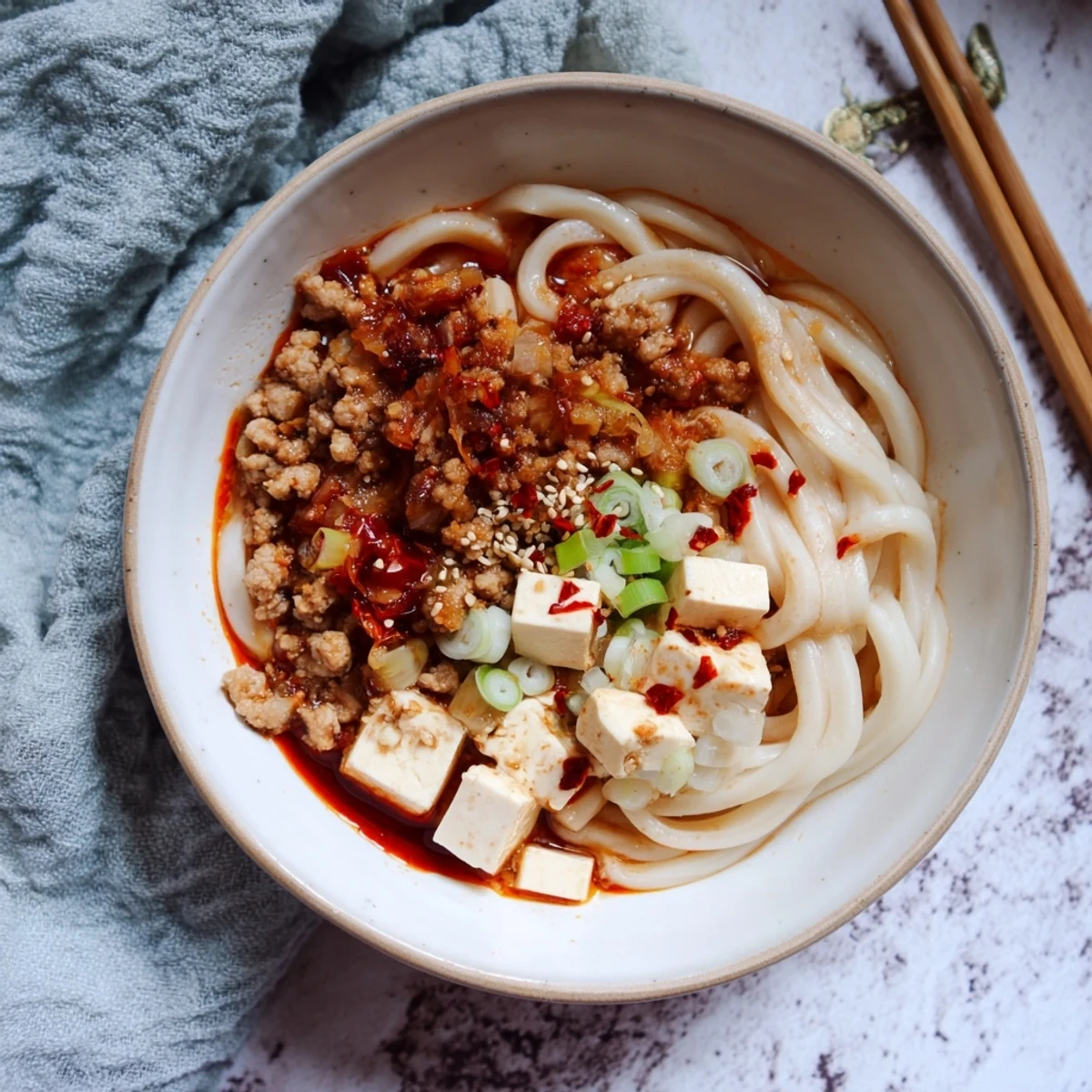
 This fusion dish brings together the numbing heat of Sichuan mapo tofu with the hearty chew of Japanese udon noodles. Soft tofu cubes and ground pork simmer in a rich, spicy sauce made with doubanjiang fermented bean paste, garlic, ginger, and toasted Sichuan peppercorns. The thickened sauce clings perfectly to thick udon noodles, creating a satisfying meal that balances bold flavors with comforting textures.
The steam was already fogging up my glasses when my roommate walked in, nose twitching like a curious cat. "Is that mapo tofu?" she asked, peering into the wok where the doubanjiang was turning the oil a brilliant red. "Sort of," I said, dropping a bundle of udon noodles into the boiling water. Tonight was the night two culinary worlds collided in my tiny kitchen.
I first attempted this mashup during a particularly brutal winter when my heating was broken and I needed something that would warm me from the inside out. My friend Sarah took one bite, eyes wide, and immediately demanded the recipe. Now it has become our go-to comfort food whenever life feels overwhelming and we need something bold to wake us back up.
Ingredients
- 300 g soft tofu, cubed: Silken tofu holds its shape better than you might expect, but handle it gently when folding it into the sauce
- 200 g ground pork: Plant-based mince works surprisingly well here and actually absorbs the spicy flavors even faster than meat
- 400 g fresh udon noodles: Fresh udon has that satisfying springy texture that perfectly balances the silky mapo sauce
- 2 tablespoons vegetable oil: You need enough oil to properly bloom the spices and carry that chili flavor throughout the dish
- 3 cloves garlic, minced: Fresh garlic is nonnegotiable here, nothing compares to that sharp aromatic punch
- 1 tablespoon fresh ginger, minced: Ginger adds a bright warmth that cuts through the rich, spicy sauce
- 2 spring onions, sliced: Separating the white and green parts lets you use the whites for cooking and greens for fresh garnish
- 1 tablespoon Sichuan peppercorns, lightly crushed: The numbing sensation is what makes mapo tofu uniquely addictive
- 2 tablespoons doubanjiang: This fermented chili bean paste is the soul of the dish, worth seeking out at an Asian market
- 1 tablespoon soy sauce: Adds that essential umami depth and rounds out the saltiness
- 1 tablespoon oyster sauce: Mushroom sauce works perfectly for vegetarians and brings a similar richness
- 1 tablespoon Shaoxing wine: Dry sherry is an acceptable substitute if you cannot find Chinese cooking wine
- 1 teaspoon sugar: Just enough to balance the heat and salt without making the dish sweet
- 1 cup low-sodium broth: Chicken or vegetable broth creates the silky sauce base that clings to every noodle
- 1 tablespoon cornstarch mixed with 2 tablespoons water: This slurry transforms the broth into that glossy, restaurantstyle sauce
- Chopped green onions and toasted sesame seeds: Fresh garnish adds color and a final layer of flavor
Instructions
- Prepare your workspace:
- Get all your ingredients measured and ready before you turn on any heat. Set a large pot of water to boil for the udon noodles.
- Toast the Sichuan peppercorns:
- Heat oil in a large skillet or wok over medium heat. Add the crushed peppercorns and toast for about 30 seconds until you can smell their citrusy aroma. Remove them if you prefer less heat, or leave them in for extra numbing power.
- Bloom the aromatics:
- Add the garlic, ginger, and white parts of the spring onions to the peppercorninfused oil. Sauté for about 1 minute until fragrant but not browned.
- Brown the protein:
- Crank the heat to mediumhigh and add your ground pork or plantbased mince. Cook until browned, breaking it into small pieces with your spatula as it cooks.
- Awaken the chili paste:
- Stir in the doubanjiang and cook for 1 to 2 minutes. Watch as the oil turns a deep red and becomes incredibly fragrant.
- Build the sauce:
- Pour in the soy sauce, oyster sauce, Shaoxing wine, and sugar. Mix everything well and let the flavors meld for about 30 seconds.
- Add tofu and broth:
- Gently fold in the cubed tofu and pour in the broth. Let it simmer for 5 minutes, occasionally spooning the sauce over the tofu to help it absorb the flavors.
- Thicken the sauce:
- Stir in your cornstarch slurry and simmer for another 2 to 3 minutes. The sauce will transform into a glossy, velvety coating that clings beautifully to everything it touches.
- Cook the noodles:
- While the mapo tofu simmers, drop your fresh udon noodles into the boiling water. Cook according to package instructions, drain well, and divide among four serving bowls.
- Bring it all together:
- Spoon generous amounts of the mapo tofu over the noodles. Garnish with the reserved green onions, toasted sesame seeds, and a drizzle of chili oil if you are feeling brave. Serve immediately while everything is piping hot.
 Pin It
 Last month, I made this for a dinner party and watched in amusement as my spice-averse friend tentatively took her first bite. She paused, eyes closed, and then reached immediately for seconds. Sometimes the most unexpected combinations become the ones we cannot stop craving.
Getting the Sauce Consistency Right
I learned through multiple failed attempts that the cornstarch slurry needs to be cold when you add it to the hot sauce. If you mix it ahead of time and let it sit, it separates and creates weird gelatinous chunks instead of smoothly thickening your beautiful sauce.
Noodle Timing Secrets
There is nothing sadder than perfectly saucy mapo tofu served over mushy, overcooked noodles. Time your udon cooking so they finish right when the sauce reaches its final simmer. Fresh udon cooks in just 2 to 3 minutes, so wait until the very end to drop them in the water.
MakeAhead Magic
The mapo tofu component actually tastes better if made a day ahead and stored in the refrigerator. The flavors meld and develop a depth that fresh cooking cannot quite achieve.
- Reheat gently with a splash of water to loosen the sauce
- Cook fresh noodles when you are ready to serve, never reheat cooked udon with the sauce
- Top with fresh garnish just before serving to maintain texture contrast
 Pin It
 I hope this recipe finds its way into your regular rotation. There is something deeply satisfying about twirling those thick noodles through spicy, numbing sauce at the end of a long day.
Recipe Questions & Answers
- → Can I make this vegetarian?
-
Yes, substitute ground pork with plant-based mince and replace oyster sauce with mushroom sauce. Use vegetable broth instead of chicken broth for a fully vegetarian version.
- → Is mapo tofu udon very spicy?
-
The dish has moderate heat from doubanjiang and optional Sichuan peppercorns. Adjust spiciness by reducing fermented bean paste or omitting chili oil garnish. The numbing sensation from peppercorns adds authentic Sichuan character.
- → What type of tofu works best?
-
Soft or silken tofu creates the most tender texture, gently absorbing the spicy sauce. Handle carefully when cubing and adding to the pan to maintain shape. Firm tofu can be used but will be less creamy.
- → Can I use other noodles instead of udon?
-
Thick wheat noodles like ramen or even wide rice noodles work well. Udon's chewy texture complements the soft tofu perfectly, so choose substantial noodles that won't get lost in the rich sauce.
- → How do I prevent tofu from breaking apart?
-
Carefully add tofu cubes after the sauce has formed, then simmer gently rather than boiling vigorously. Spoon sauce over tofu instead of stirring vigorously during the 5-minute simmering process.
- → What is doubanjiang and where can I find it?
-
Doubanjiang is a fermented broad bean and chili paste fundamental to Sichuan cooking. Look for it in Asian grocery stores or the international aisle of well-stocked supermarkets. It provides the signature red color and deep, complex spicy flavor.