
 Pin It
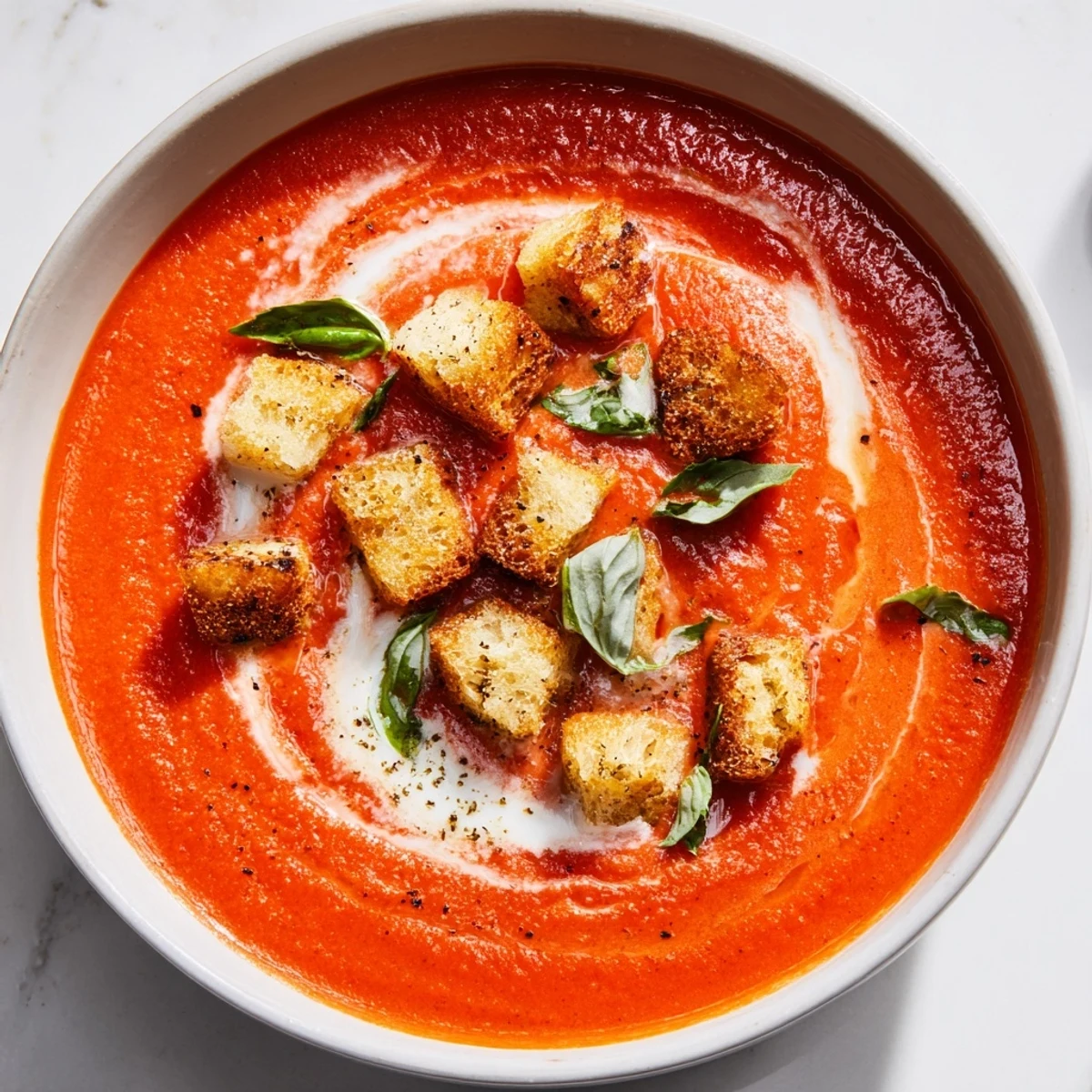
 This tomato basil creation features sweet roasted garlic and caramelized tomatoes blended into a velvety, aromatic bowl. The addition of fresh basil adds herbal brightness, while homemade croutons provide a satisfying crisp contrast. Gently simmered and optionally finished with cream, it offers a comforting balance of flavors ideal for any season. Simple techniques like roasting and blending enhance the natural sweetness and depth.
Perfect for a quick yet heartfelt meal, this dish embodies warmth through fresh Mediterranean-inspired ingredients and textures that delight the palate.
There's something about late summer that makes me crave tomato soup, even when it's still warm outside. I learned this recipe from a friend who swore that roasting tomatoes and garlic together was the secret to depth that you couldn't get any other way. The first time I made it, I burned the croutons—but the soup itself was so good that nobody minded. Now it's become my go-to when I want something that feels both fancy and deeply comforting.
I made this for my sister during one of those days when she just needed to sit down with something warm. She closed her eyes after the first spoonful and didn't say anything for a minute, which is the highest compliment. That's when I knew this recipe was worth keeping.
Ingredients
- Ripe tomatoes (2 lbs): Choose tomatoes that smell sweet and fragrant; they should yield slightly when you squeeze them gently. Halving them exposes the flesh to the heat, which creates that caramelized edge.
- Garlic head (1 large): Roasting transforms garlic into something almost candy-like, so don't skip this step or substitute with raw garlic.
- Yellow onion (1 medium): The onions sweeten in the oven and add body to the broth; chopping them roughly is fine since you'll blend everything.
- Olive oil (2 tbsp for soup, 2 tbsp for croutons): Good olive oil matters here because you taste it directly; use something you'd actually enjoy eating on its own.
- Vegetable broth (4 cups): This is your foundation, so don't use anything overly salty or you'll struggle to adjust seasoning later.
- Fresh basil (1/2 cup): Add this after blending so the flavor stays bright and alive; cooked basil tastes flat and musty.
- Sugar (1 tsp, optional): Use this only if your tomatoes taste tart—it balances acidity without making the soup sweet.
- Salt and pepper: Taste as you go; seasoning at the end gives you more control than seasoning at the start.
- Heavy cream or plant-based cream (1/4 cup, optional): A swirl of cream softens the acidity and adds richness, but the soup stands beautifully on its own without it.
- Day-old bread (3 cups, cut into 1/2-inch cubes): Slightly stale bread holds its shape better when baking and gets crispier than fresh bread.
- Dried oregano or Italian herbs (1/2 tsp): This seasons the croutons without overpowering them; you could also use thyme or rosemary if you prefer.
Instructions
- Start the oven and prep your garlic:
- Heat your oven to 400°F and get a baking sheet ready. Slice off the top of the garlic head to expose the cloves—you'll hear a little crunch—then drizzle the cut side with a teaspoon of olive oil and wrap the whole thing loosely in foil. This steams the garlic gently while the outside gets golden.
- Roast the tomatoes and onions:
- Arrange your halved tomatoes cut side up on the baking sheet with the garlic, then scatter the chopped onions around them. Drizzle everything with the remaining olive oil and sprinkle with salt and pepper—don't skip this step, as it seasons the vegetables as they cook and helps them caramelize.
- Get the croutons going:
- While the vegetables roast, toss your bread cubes with olive oil, dried herbs, and a pinch of salt. Spread them on a separate baking sheet in a single layer and slide them into the oven—they'll need about 10 to 15 minutes, and you want to stir them halfway through so they brown evenly on all sides.
- Watch for doneness:
- After 30 to 35 minutes total, the tomatoes should look soft and slightly caramelized at the edges, and the garlic will smell incredible and be completely tender. Pull everything out—the croutons should be golden and crisp by now, so remove those first if they're done ahead of the tomatoes.
- Release the roasted garlic:
- Once the garlic is cool enough to handle, simply squeeze each clove out of its papery skin. They should pop right out, creamy and sweet, nothing like raw garlic at all.
- Build and simmer your soup:
- Pour the roasted tomatoes and onions into a large pot, squeeze in all your garlic cloves, and add the vegetable broth and basil. Bring it to a gentle simmer over medium heat and let it bubble quietly for about 10 minutes so the flavors can meld together.
- Blend until smooth:
- If you have an immersion blender, slide it right into the pot and blend until there are no chunks left—work it around the bottom and sides. If you're using a regular blender, work in batches and be careful with hot soup, letting it cool slightly first or leaving the blender lid loose so steam can escape.
- Finish and season:
- Stir in the cream if you're using it, then taste and adjust salt and pepper until it tastes just right to you. Sometimes a tiny pinch more salt is all it needs; sometimes a crack of pepper wakes everything up.
- Serve and garnish:
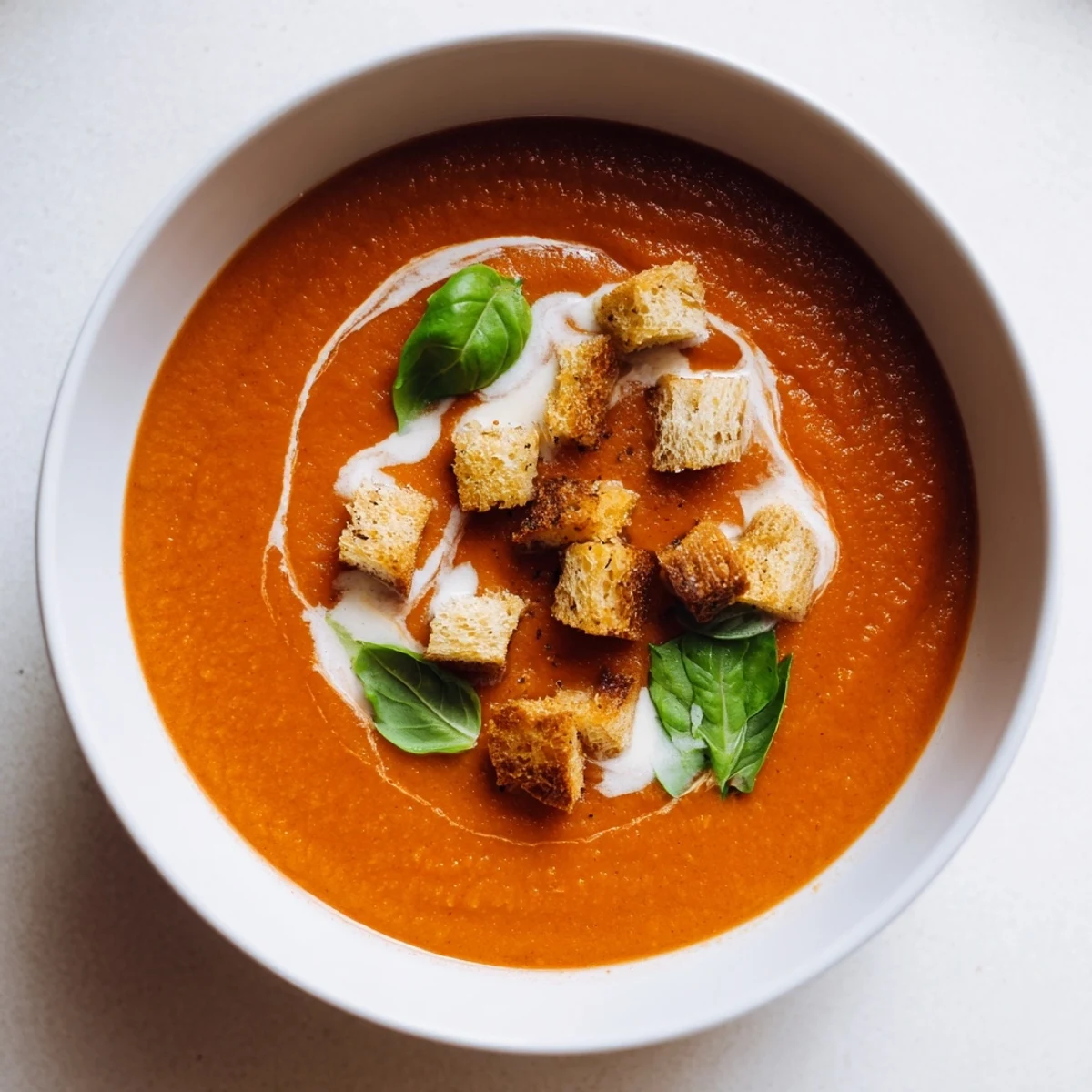
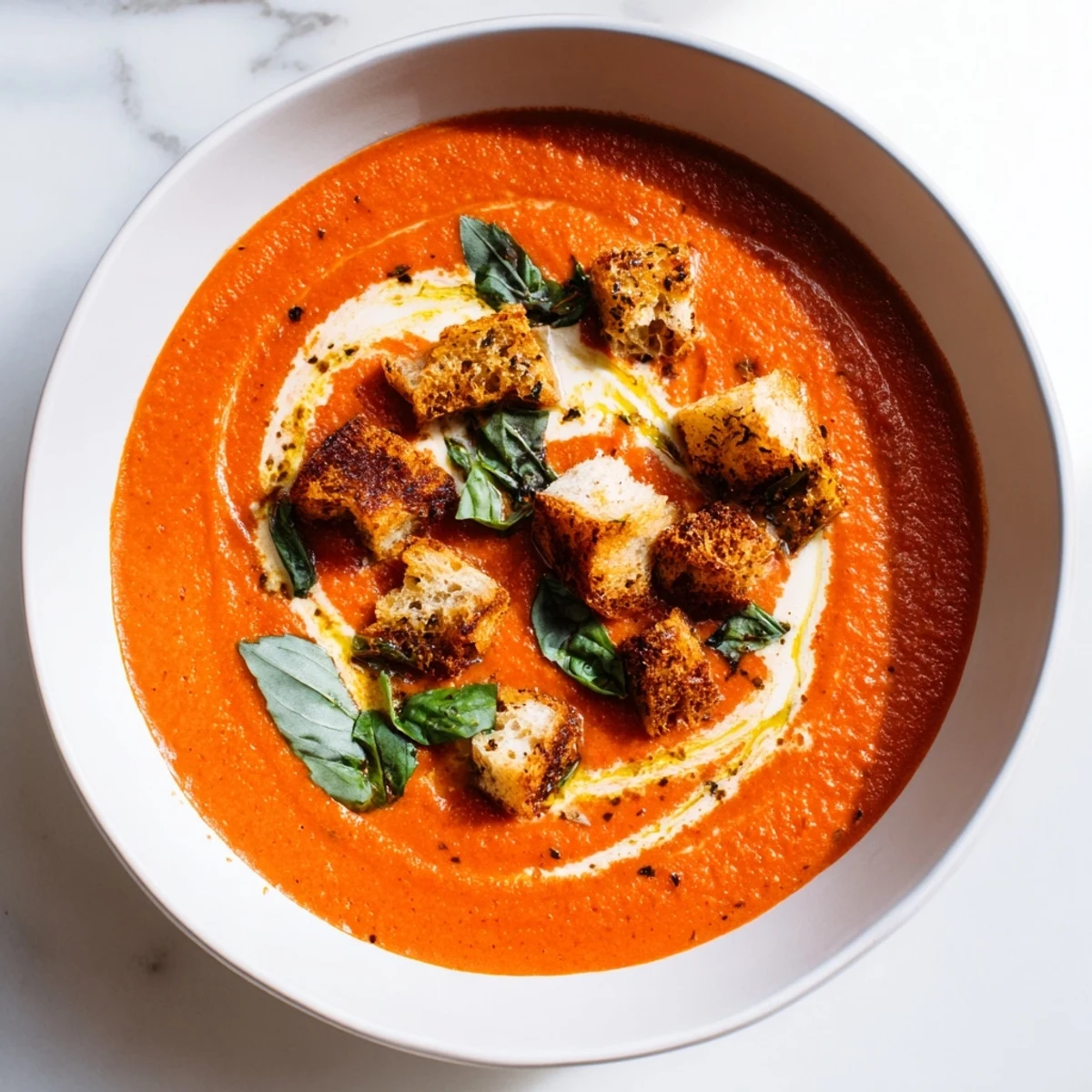
- Ladle the soup into bowls and top each one with a handful of warm croutons and a small tear of fresh basil. The contrast between the warm, velvety soup and the crisp croutons is what makes this dish really sing.
 Pin It
 I remember my neighbor appearing at my door one rainy afternoon, following the smell of this soup down the street. We ended up sitting in my kitchen for hours, talking through an entire pot and a loaf of bread. That's when I realized food really is how you show people they matter.
Why Roasting Changes Everything
Raw tomatoes are bright and acidic; roasted tomatoes become almost jammy, with a depth that raw recipes can never touch. The same goes for garlic—roasting mellows it into something almost buttery. When you roast vegetables together, they caramelize slightly, developing those brown edges that add a subtle sweetness and savory complexity. This is why the recipe asks you to spend a little time on this step instead of just throwing everything into a pot with heat.
Customizing This Soup
The beauty of this recipe is how willing it is to bend to what you have. If you don't have fresh basil, dried basil works—just add it during the roasting so it has time to soften and release its flavor. A splash of balsamic vinegar adds a subtle sweetness that some people love; others prefer a tiny squeeze of lemon juice to brighten everything up. You can also stir in a dollop of pesto at the very end, or top the soup with crispy bacon if you're not vegetarian.
Making This Ahead and Storing
This soup actually tastes better the next day, after the flavors have had time to settle and deepen. You can make it up to three days ahead and refrigerate it in an airtight container, then gently reheat it on the stove over medium heat, stirring often so it doesn't catch on the bottom. The croutons, though, should be made fresh—they go soft if stored in the soup, but you can make them ahead and store them in an airtight container for up to two days, then crisp them up in a 300°F oven for five minutes before serving.
- Freeze the soup without the cream, and thaw it overnight in the refrigerator before reheating.
- Make croutons the morning of serving so they stay crispy and perfect.
- If you're meal-prepping, store soup and croutons separately to prevent sogginess.
 Pin It
 This soup has a way of making ordinary days feel special. Serve it with crusty bread and a simple salad, and you've got a meal that tastes like you spent all afternoon in the kitchen.
Recipe Questions & Answers
- → How does roasting garlic affect the flavor?
-
Roasting garlic mellows its sharpness, bringing out a sweet, nutty depth that enriches the overall dish.
- → Can I substitute the bread used for croutons?
-
Yes, using day-old bread with a sturdy texture works best for crisp croutons; gluten-free alternatives can be used as needed.
- → Is it necessary to use cream in the soup?
-
Cream adds richness and smoothness but can be omitted or replaced with plant-based alternatives for a lighter finish.
- → What is the best way to blend the soup smoothly?
-
An immersion blender allows easy blending directly in the pot; alternatively, blend in batches using a countertop blender.
- → How do fresh basil leaves influence the flavor?
-
Fresh basil adds a bright, herbal note that balances the sweetness of roasted tomatoes and garlic.
- → Can balsamic vinegar be added?
-
A splash of balsamic vinegar enhances the soup’s acidity and depth without overpowering the main flavors.