
 Pin It
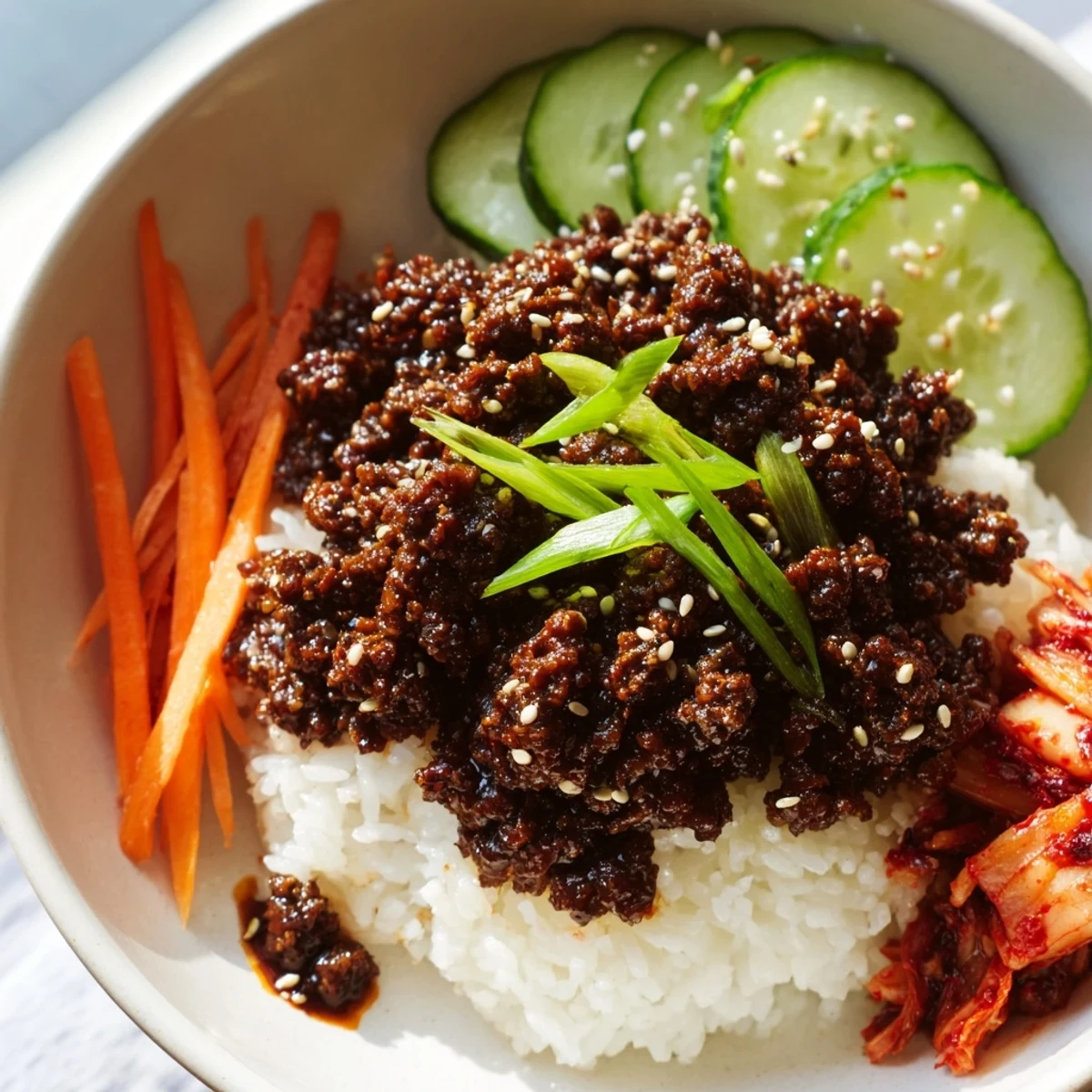
 This Korean ground beef bowl comes together in just 25 minutes, making it perfect for busy weeknights. Lean ground beef is browned and simmered in a rich sauce of soy sauce, brown sugar, sesame oil, garlic, ginger, and gochujang until beautifully caramelized and coated.
Served over fluffy jasmine or short-grain rice and topped with green onions, sesame seeds, julienned carrot, cucumber, and optional kimchi, each bowl delivers a satisfying balance of sweet, savory, and spicy flavors. The dish is naturally dairy-free and easily adaptable for gluten-free diets by swapping soy sauce for tamari.
With simple ingredients and straightforward preparation, this bowl is an easy, crowd-pleasing meal that brings bold Korean-inspired flavors to your table with minimal effort.
The sizzle of ground beef hitting a hot pan on a Tuesday evening is one of those sounds that instantly signals dinner is going to be good. I threw this Korean ground beef bowl together during a week when cooking felt like a chore, and it shocked me with how much flavor came from so little effort. The sauce caramelizes into something sticky and irresistible, clinging to every crumb of beef. Twenty five minutes later I was scraping the skillet clean and already planning to make it again.
My roommate wandered into the kitchen just as I was spooning the glossy beef over rice and immediately demanded a bowl. We stood at the counter eating because neither of us wanted to wait long enough to sit at the table. She looked at me mid bite and said this is the kind of thing you could sell, which might be the best compliment a home cook can get.
Ingredients
- 1 lb (450 g) lean ground beef: Lean works best here because you want flavor without too much grease pooling in the sauce.
- 2 cups cooked jasmine or short grain rice: Short grain rice gives that slightly sticky chew that soaks up sauce beautifully, but jasmine works in a pinch.
- 1/4 cup low sodium soy sauce: Low sodium lets you control the salt level while still getting that deep umami backbone.
- 2 tbsp brown sugar: This is what helps the sauce thicken and caramelize as it simmers with the beef.
- 1 tbsp sesame oil: A little goes a long way and adds a nutty warmth that ties everything together.
- 3 cloves garlic, minced: Fresh garlic matters here because it blooms in the hot sauce and becomes sweet and fragrant.
- 1 tbsp grated fresh ginger: Grate it finely so it melts into the sauce rather than leaving stringy bits behind.
- 1/2 to 1 tsp crushed red pepper flakes: Start with half a teaspoon and taste before adding more because the heat builds as the sauce reduces.
- 2 tsp rice vinegar: Just a splash brightens the whole dish and cuts through the richness of the beef.
- 1 tbsp gochujang (optional): If you have it, add it for a deeper fermented chili flavor that regular flakes cannot replicate.
- 2 green onions, sliced: Slice them on a sharp diagonal so they look as good as they taste scattered on top.
- 1 tbsp toasted sesame seeds: Toast them in a dry pan for a minute until golden and your whole kitchen will smell incredible.
- 1 carrot, julienned: The crunch and sweetness are a perfect contrast to the soft savory beef.
- 1 small cucumber, thinly sliced: Keep the skin on for color and a satisfying snap in every bite.
- Kimchi (optional, for serving): A spoonful of funky fermented cabbage on the side makes the whole meal feel complete.
Instructions
- Whisk the sauce together:
- In a small bowl, combine the soy sauce, brown sugar, sesame oil, garlic, ginger, red pepper flakes, rice vinegar, and gochujang if using. Whisk until the sugar dissolves and everything looks unified, then set it aside so the flavors start mingling.
- Brown the beef:
- Heat a large skillet over medium high heat and add the ground beef, breaking it apart with a spatula as it cooks. Let it sit undisturbed for a minute here and there so you get some crispy browned edges, which adds so much more flavor than constantly stirring.
- Simmer in the sauce:
- Pour the prepared sauce over the browned beef and stir well to coat every piece. Let it bubble gently for two to three minutes until the sauce thickens slightly and turns glossy, watching closely so the sugar does not burn.
- Build the bowls:
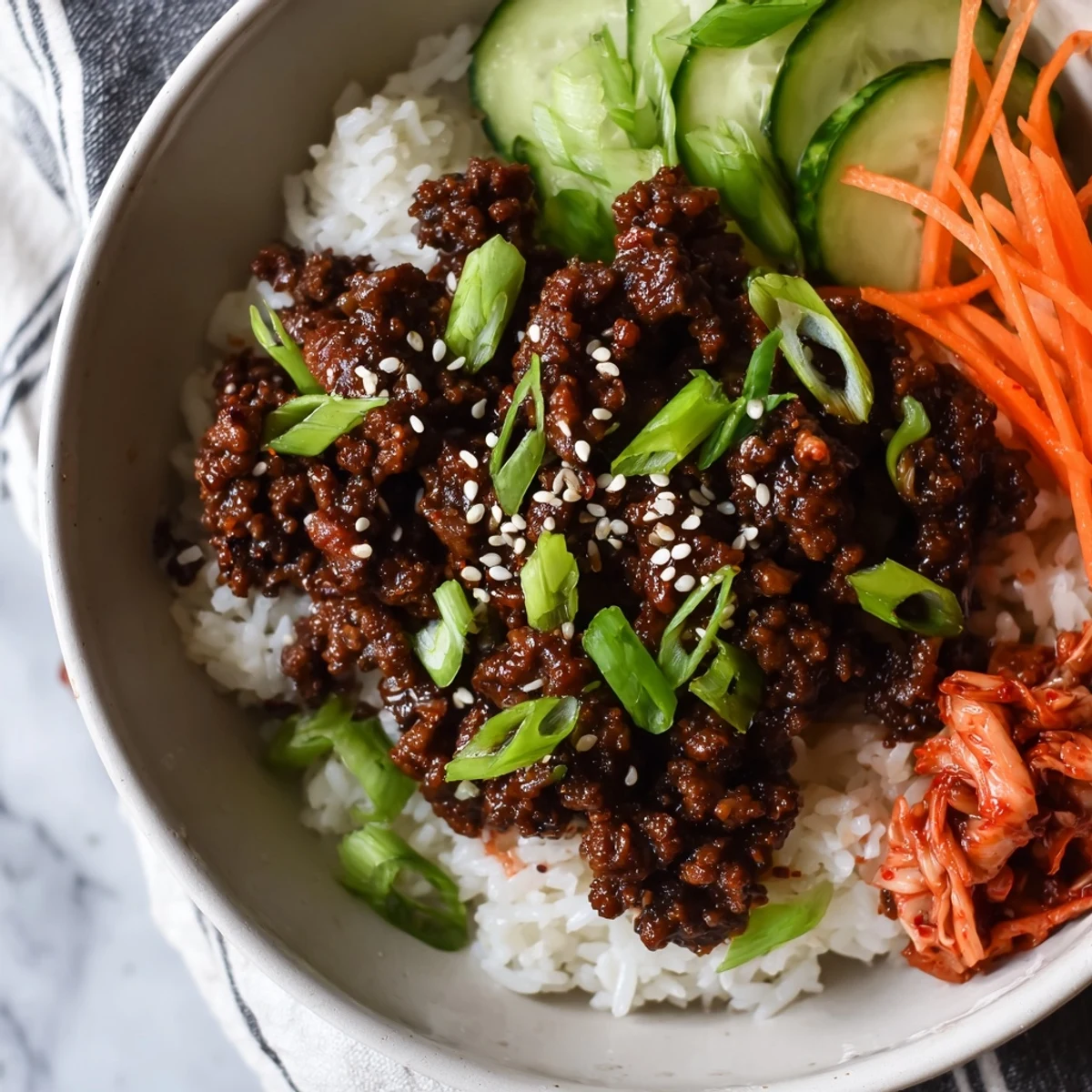
- Divide the warm cooked rice among four bowls, creating a fluffy base for the beef to rest on. Spoon the saucy ground beef generously over each portion of rice.
- Finish with fresh toppings:
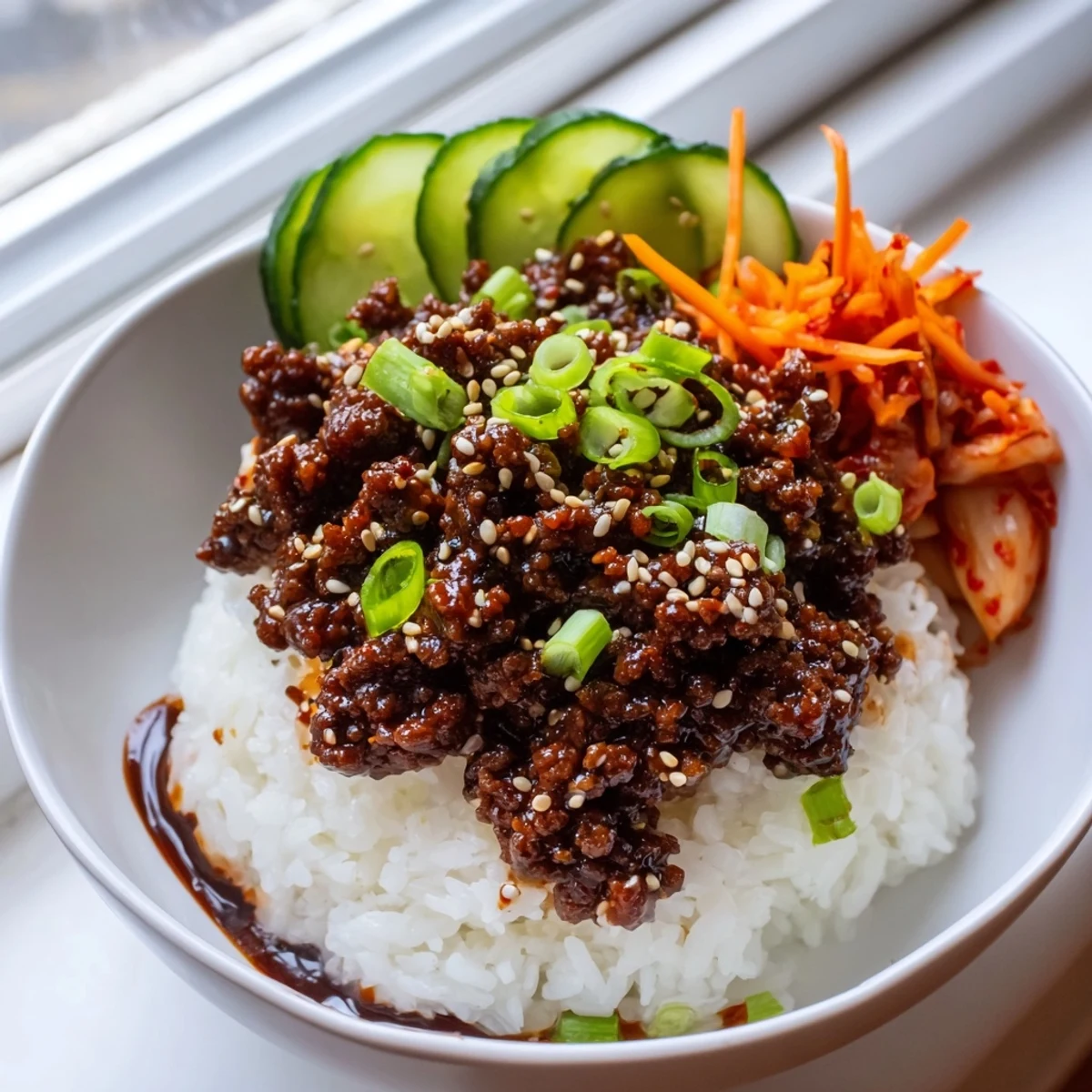
- Scatter sliced green onions, toasted sesame seeds, julienned carrot, and cucumber slices over each bowl. Add kimchi on the side if you have it and serve immediately while everything is hot and vibrant.
 Pin It
 The night I first made this for a group of friends, everyone went quiet after the first bite, which is honestly the highest form of flattery in my kitchen.
Making It Your Own
Ground chicken or turkey works beautifully if you want something lighter, though you may need an extra splash of sesame oil to compensate for the leaner meat. I have also tried crumbled firm tofu for a vegetarian version and was surprised by how well the sauce carries it. The beauty of a bowl like this is its flexibility, so use whatever protein or vegetables you have lingering in the fridge.
Gluten Free and Allergy Notes
Swap the soy sauce for tamari and you have a completely gluten free meal that tastes virtually identical to the original. Always double check your gochujang label because some brands sneak wheat into their fermentation process. This recipe is naturally dairy free, which makes it an easy win for mixed dietary needs at the dinner table.
Serving and Storing Tips
Leftovers keep surprisingly well in an airtight container in the fridge for up to three days, though the fresh toppings will soften overnight. Reheat the beef gently in a skillet with a splash of water to loosen the sauce back up.
- A fried egg on top turns this into a deeply satisfying meal with barely any extra effort.
- Double the sauce and keep half in the fridge for a quick stir fry later in the week.
- Taste the sauce before adding it to the beef so you can adjust the heat and sweetness to your liking.
 Pin It
 Some recipes earn a permanent spot in your rotation because they ask for so little and give back so much. This is absolutely one of them.
Recipe Questions & Answers
- → Can I use a different type of meat instead of ground beef?
-
Yes, ground chicken or ground turkey both work well as leaner alternatives. Simply follow the same cooking instructions, adjusting the cooking time slightly since poultry may cook a bit faster than beef.
- → How spicy is this Korean ground beef bowl?
-
The spice level is entirely adjustable. The heat comes from crushed red pepper flakes and optional gochujang paste. Start with 1/2 teaspoon of red pepper flakes and skip the gochujang for a milder dish, or increase both for a bolder, spicier kick.
- → What is gochujang and where can I find it?
-
Gochujang is a Korean fermented chili paste that adds depth, sweetness, and moderate heat. You can find it in most grocery stores in the international aisle, at Asian markets, or online. It is optional in this dish, but it adds an authentic layer of flavor.
- → How should I store leftovers?
-
Store the cooked ground beef mixture in an airtight container in the refrigerator for up to 3 days. Keep the rice and fresh toppings stored separately. Reheat the beef in a skillet or microwave and assemble fresh bowls when ready to serve.
- → Can I make this dish gluten-free?
-
Absolutely. Simply replace the regular soy sauce with tamari, which is a gluten-free alternative with a similar umami flavor. Double-check that your gochujang brand is also gluten-free, as some varieties contain wheat.
- → What rice works best for this bowl?
-
Jasmine rice and short-grain white rice are both excellent choices. Jasmine rice offers a light, fluffy texture, while short-grain rice provides a stickier, chewier bite that holds up well to the saucy beef. Use whichever you prefer.