
 Pin It
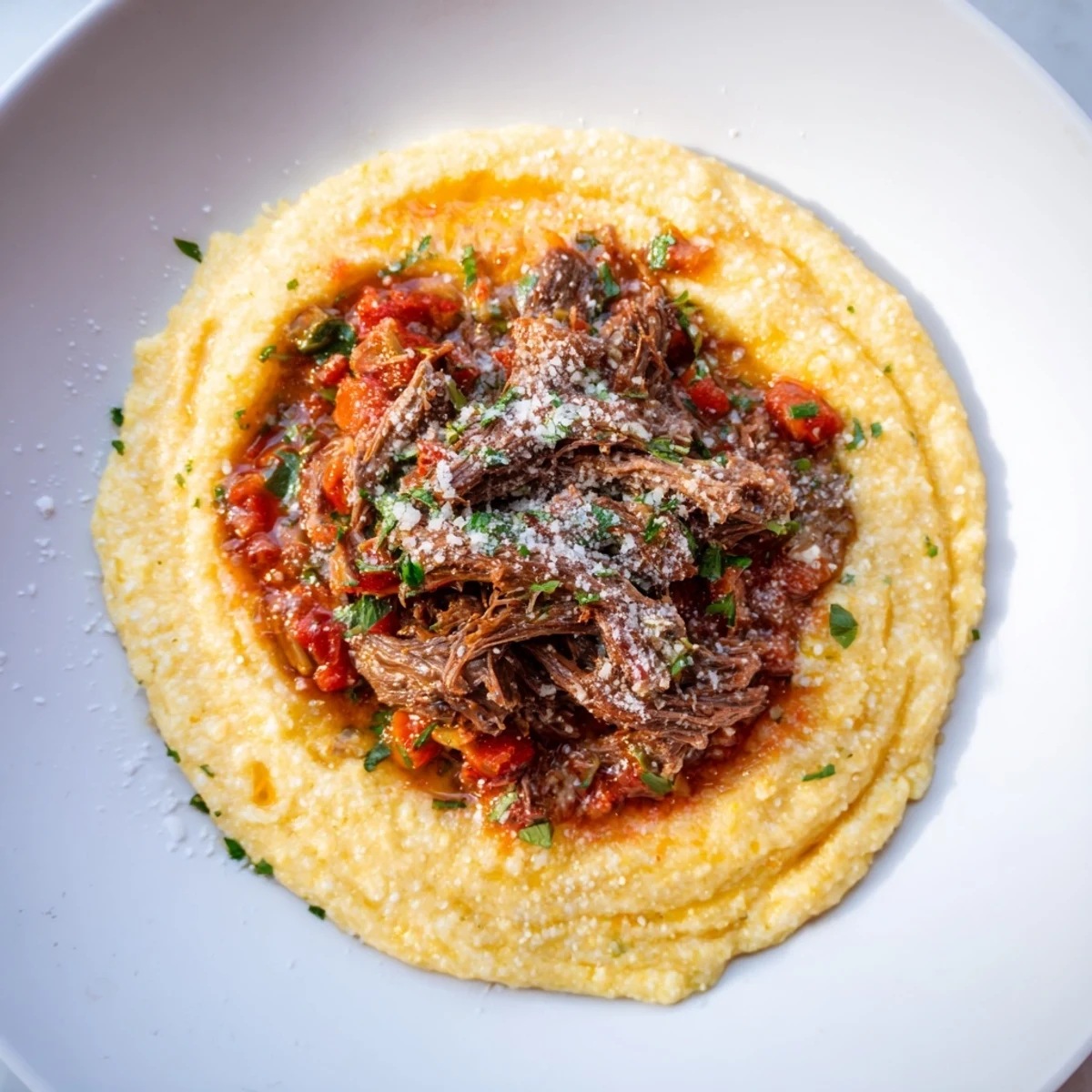
 Slow-cooked beef chuck becomes fork-tender in a rich tomato and red wine sauce, infused with aromatic vegetables and herbs. Served atop velvety polenta enriched with milk, butter, and Parmigiano-Reggiano, this dish offers deep, comforting flavors perfect for a hearty meal.
There's something about the smell of beef braising low and slow in the oven that fills a kitchen with such quiet promise. Years ago, a friend's Italian grandmother taught me that creamy polenta with beef ragu wasn't just a dish—it was patience made edible, a conversation between time and heat. The first time I made it myself, I kept checking the oven like it might disappear, amazed at how simple ingredients could transform into something so deeply satisfying. That evening changed how I cook.
I made this for my partner on a cold February night when we both needed something grounding. The kitchen steamed up from the polenta, and the ragu smelled so good we couldn't wait for the table—we ate standing up at the counter, laughing about how we'd just ruined our own dinner plans. That's when I knew this recipe was a keeper.
Ingredients
- Beef chuck, 2 lbs cut into 2-inch cubes: This cut has just enough fat and connective tissue that it becomes silky when braised, not tough or stringy.
- Olive oil, 2 tbsp: Use something you'd actually taste in a salad—the flavor matters here.
- Onion, 1 large finely chopped: This becomes the base of everything; don't rush the chopping.
- Carrots and celery, 2 each diced: These are your flavor foundation, so buy fresh ones and take a moment to cut them evenly.
- Garlic, 4 cloves minced: Fresh garlic only—jarred just won't give you that sweet, mellow depth.
- Tomato paste, 2 tbsp: This is concentrated umami; it makes the whole sauce sing.
- Dry red wine, 1 cup: Something you'd drink matters more than the price—avoid cooking wines.
- Crushed tomatoes, 1 can 28 oz: San Marzano if you can find them, but good crushed tomatoes work beautifully.
- Fresh thyme and bay leaf: These herbs are subtle but essential; don't skip them or substitute dried.
- Beef stock, 1 cup: Homemade is ideal, but good store-bought works if you avoid the overly salty versions.
- Water, 4 cups for polenta: Tap water is fine, but soft water makes creamier polenta.
- Polenta coarse cornmeal, 1 cup: Look for actual polenta, not instant—the texture difference is real.
- Whole milk, 1 cup: Full-fat milk is what makes this creamy; don't use skim.
- Unsalted butter, 3 tbsp: Butter is the final secret; never skip it.
- Parmigiano-Reggiano, 1/2 cup grated: Grate it fresh—pre-grated has additives that affect how it melts.
Instructions
- Get your oven ready and brown the beef:
- Set your oven to 325°F and let it heat while you pat the beef dry—this is the trick that makes it brown instead of steam. In a large Dutch oven, heat olive oil until it shimmers, then work in batches, searing the beef until each piece has a dark golden crust on all sides.
- Build your flavor base:
- Once the beef is out, add the chopped onion, carrots, and celery to the same pot, letting them soften and pick up all those browned bits stuck to the bottom. After about six minutes, add the minced garlic and tomato paste, stirring constantly for just a minute so the paste doesn't scorch.
- Deglaze and simmer:
- Pour in the red wine, scraping the bottom with a wooden spoon to loosen all that caramelized flavor, and let it reduce for a couple minutes until it smells rich and wine-forward. This step tastes sharp and almost strange, but trust that it's building something complex.
- Bring it together in the oven:
- Add the crushed tomatoes, thyme sprigs, bay leaf, beef stock, and the browned beef back to the pot, stirring gently to combine. Cover and slide into the oven for two to two and a half hours, until the beef shreds easily with a fork and the sauce has darkened and concentrated.
- Finish the ragu:
- Pull the pot from the oven, fish out the thyme and bay leaf, then use two forks to shred the beef right in the sauce, letting it break down and integrate. Keep this warm on low heat while you make the polenta.
- Whisk the polenta slowly and patiently:
- Bring water and a generous pinch of salt to a boil in a large saucepan, then slowly pour in the polenta while whisking constantly to prevent lumps from forming. This takes about thirty minutes of low heat and frequent whisking, and it's worth the time—the cornmeal gradually turns creamy and thick, and your arm gets a workout.
- Add milk, butter, and cheese for creaminess:
- Once the polenta is thick and pulls away from the sides of the pan, stir in the milk, butter, and freshly grated Parmigiano-Reggiano, tasting and adjusting salt as you go. The butter and cheese melt into something impossibly smooth and rich.
- Plate and serve:
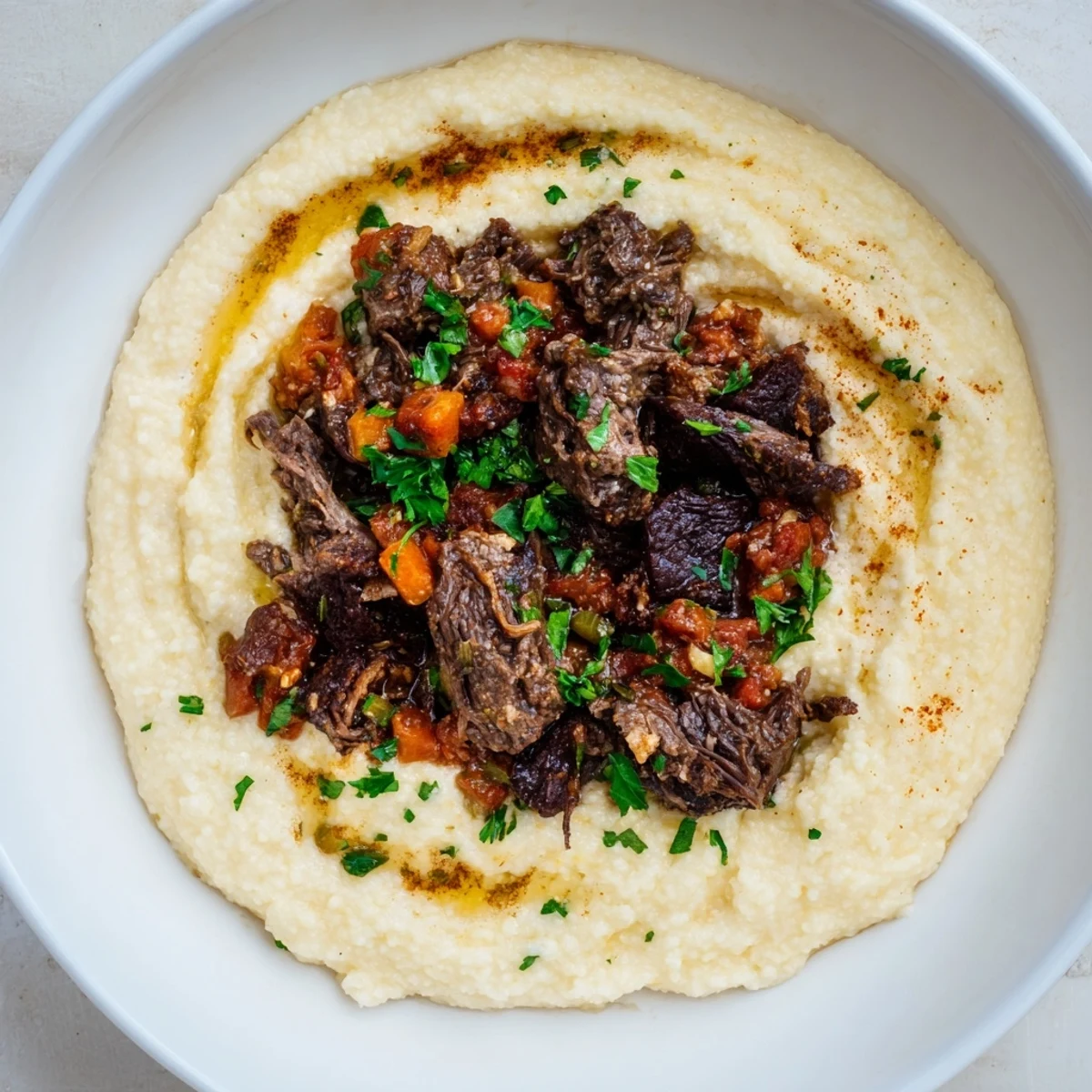
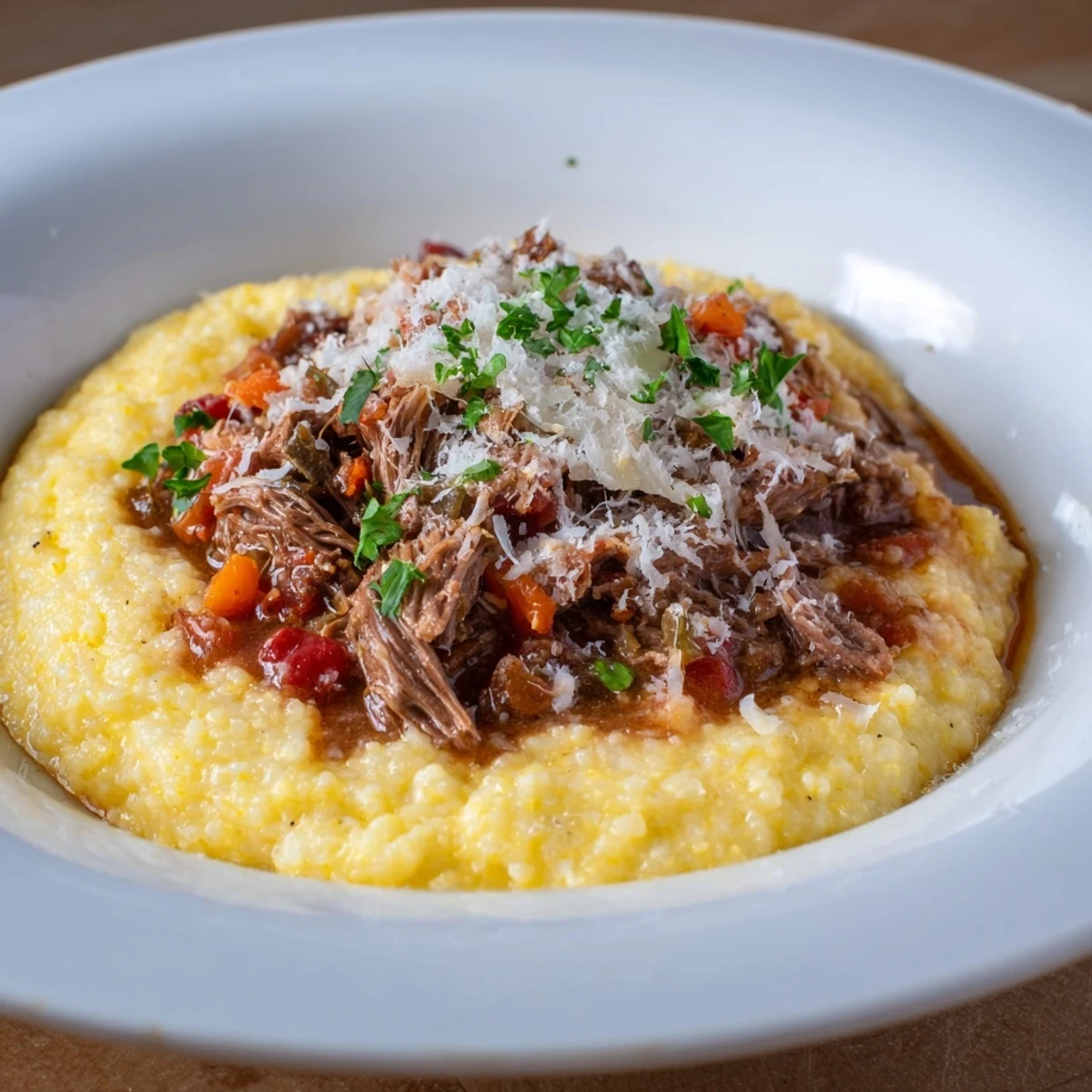
- Spoon the creamy polenta into warm bowls, then ladle the braised beef ragu generously over the top. Finish with extra grated cheese and a small handful of fresh parsley if you have it.
 Pin It
 My grandmother once told me that real cooking is about knowing when to be patient and when to let things happen without you. Making this dish taught me exactly what she meant.
The Magic of Long, Slow Cooking
Braising isn't complicated—it's just meat, aromatics, liquid, and time. The oven does most of the work while you're free to do something else, but there's a reason this method has been around for centuries. Low heat breaks down collagen into gelatin, which is what makes the beef silky and the sauce luxuriously thick without any flour or thickening agents.
Why Polenta Deserves More Love
People often think polenta is too fussy or too boring, but it's actually one of the most forgiving things you can make once you understand what's happening. The constant whisking keeps the heat distributed evenly and prevents lumps, and watching it transform from loose porridge into something creamy is oddly meditative.
Making This Meal Your Own
The beauty of this recipe is how flexible it actually is—the foundation is strong enough to handle your own touches. A splash of balsamic vinegar in the final minutes adds a subtle sweetness, a pinch of chili flakes brings gentle heat, and some people swear by a small square of dark chocolate to deepen the ragu.
- If you want to substitute pork shoulder for the beef, use the exact same method and timing.
- Make the ragu a day or two ahead and reheat it gently—the flavors actually deepen after sitting overnight.
- Serve alongside a good red wine like Chianti or Barolo, something earthy and not too heavy.
 Pin It
 This is the kind of meal that lingers in your kitchen for hours afterward, filling the air with warmth and the promise of something good. Make it when you want to slow down.
Recipe Questions & Answers
- → Can I use a different cut of meat?
-
Yes, pork shoulder or beef short ribs work well as alternatives to chuck.
- → How do I store leftovers?
-
Keep the ragu and polenta separate in airtight containers in the fridge for up to 3 days.
- → Can I make this in a slow cooker?
-
Brown the meat and vegetables first, then cook on low for 6-8 hours until tender.
- → Is the polenta gluten-free?
-
Yes, polenta is naturally gluten-free, just ensure your stock and other ingredients are certified GF.
- → What can I serve with this?
-
A simple green salad with vinaigrette complements the rich flavors nicely.